• Custom knife expert for 40 years
  • Exclusive designs & limited editions
  • Personal customer service
  • Offering custom knives from some of
    the best custom knife makers in the world
25
JUN
2021

Damascus Fixed Blades Defined

Posted By :
Comments : 0

(cont. from Damascus Fixed Blades category page)

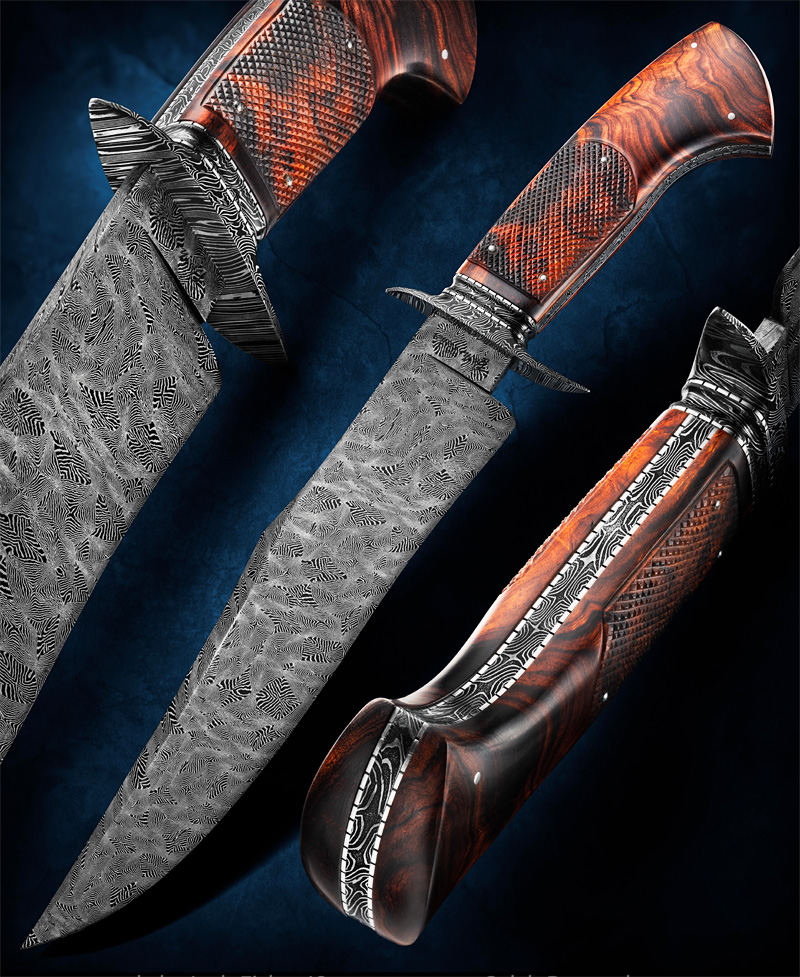
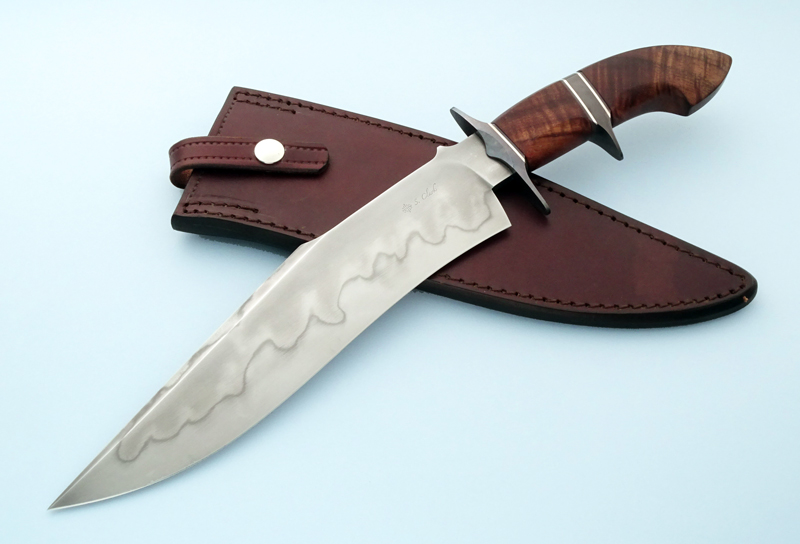
The majority of forged blades are flat ground. Simply put, this means the blade tapers all the way from the spine to the edge from both sides. Doing so makes this a more difficult grind as the maker has to remove a lot of metal. The advantage gained is a lighter blade that maintains its integrity.

Another technique utilized with forged blades is differential heat treatment. Basically, this creates a harder edge and a softer spine. The blade will generally have a temper line showing the difference between the harder and softer parts of the blade.

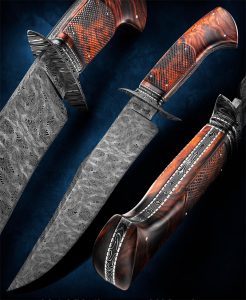
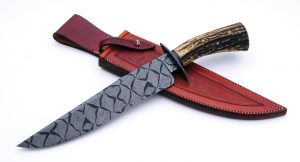
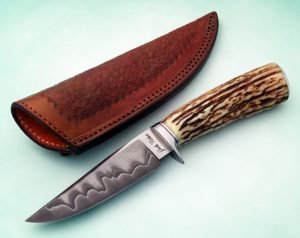
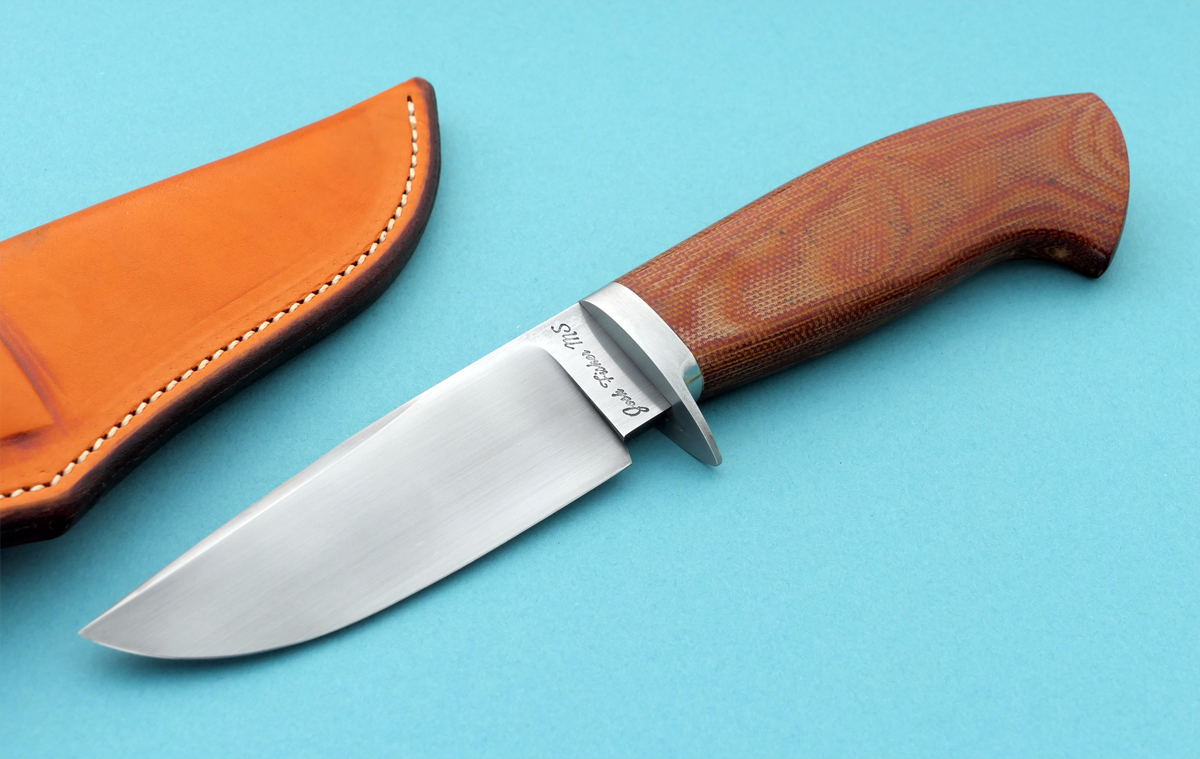
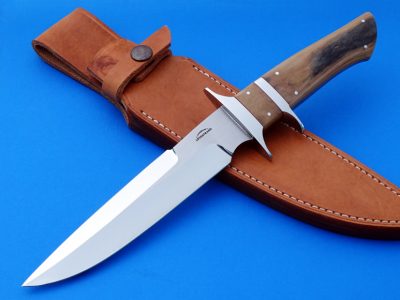
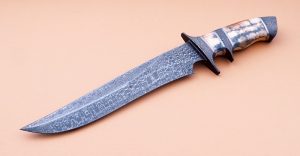
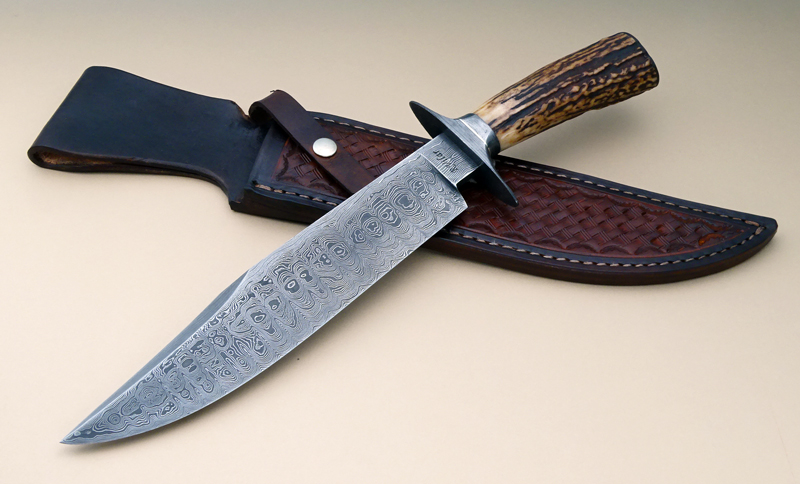
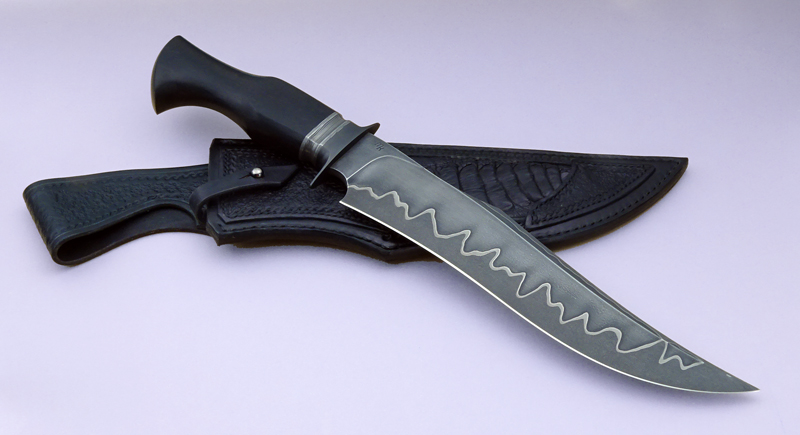
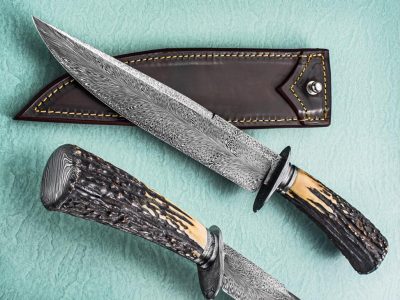
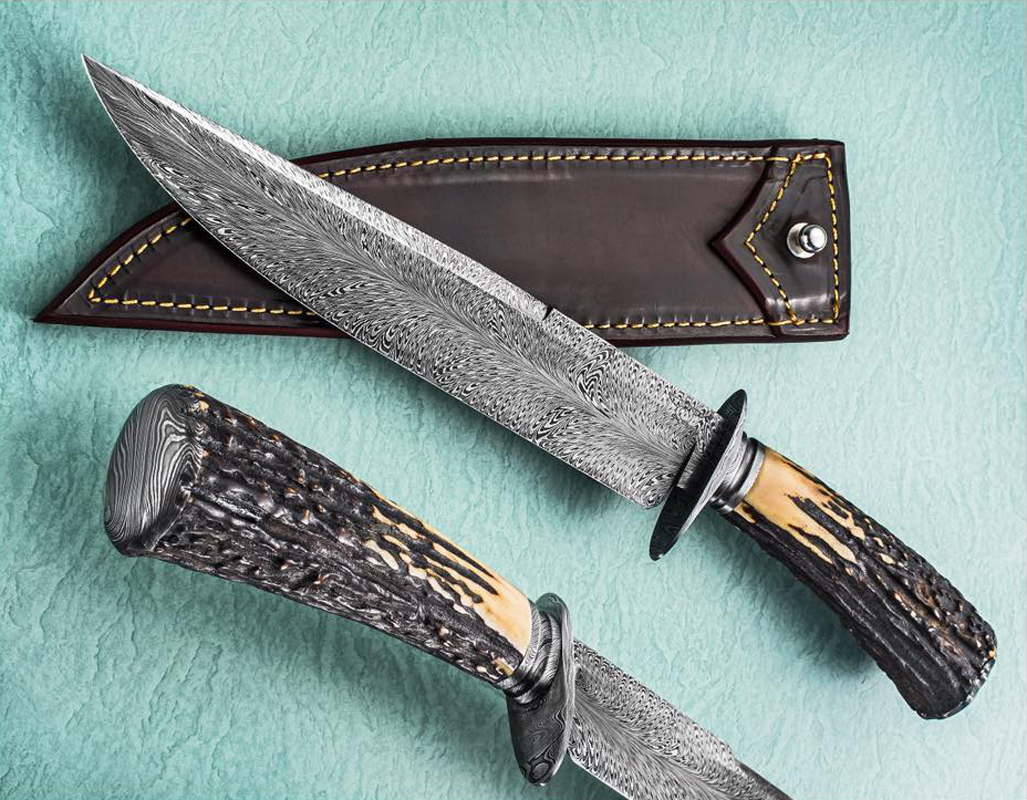
Damascus fixed blades can come in all lengths and styles. (Click to see these examples)
Skinning Knives
Fighters
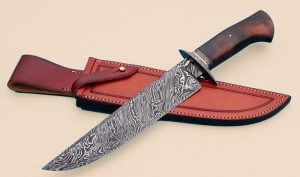
Damascus Bowies

While all Damascus is forged, how it comes to be on a knife can differ. Custom knife makers who forge their knives generally will make their own Damascus. While many makers who utilize the stock removal method, will purchase their Damascus from a third party who specialize in making Damascus.


Robertson’s Custom Cutlery is your source for custom knives from today’s leading custom knife makers. We only feature the highest quality knives at value prices. Our custom fixed and folding knife selection includes tactical fixed and folding knives, presentation fixed and folding knives, bowies, hunters and skinners, and a large selection of forged blades. Les Robertson, author and owner of Robertson’s Custom Cutlery, is also a Field Editor for Blade Magazine and an instructor at Blade University. If you have questions about the content in this article or about any knife or maker on our website, you can contact Les directly at customknives@comcast.net or (706) 650-0252.

25
JUN
2021

Slip Joint and Multi-Blade Folding Knife Defined

Posted By :
Comments : 0

(cont. from Slip Joint and Multi-Blade Folding Knives category page)

The majority of slip joint and multi-blade folders made today are based on designs from, in some cases, the 1880’s.  Handle materials such as, jigged bone, Stag, wood and even Ivory on slip joint folding knives is nothing new.  Steels and handle materials have been upgraded since then and today.

Two terms often associated with slip joint folding knives are “Walk and Talk.”

Walk

The polished part of the spring front where the tang end and torque point move when opening and closing the blade.

Talk

The sound a blade makes when it snaps open or shuts at the end of the walk, causing knife people to speak of the “walk and talk” of the pocket knife.

The custom versions of these knives started to gain in popularity in the 1990’s.  This was due in large part to the custom knife maker Tony Bose.   Tony is considered the premier slip joint folding knife maker in the world.

While slip joint folding knives may have been the preferred folder of your father or grandfather, these knives have nothing on the custom versions that are being produced today.   The quality, steel(s), tolerance’s, and material choices help to keep the knives from two centuries ago still relevant today.


Robertson’s Custom Cutlery is your source for custom knives from today’s leading custom knife makers. We only feature the highest quality knives at value prices. Our custom fixed and folding knife selection includes tactical fixed and folding knives, presentation fixed and folding knives, bowies, hunters and skinners, and a large selection of forged blades. Les Robertson, author and owner of Robertson’s Custom Cutlery, is also a Field Editor for Blade Magazine and an instructor at Blade University. If you have questions about the content in this article or about any knife or maker on our website, you can contact Les directly at customknives@comcast.net or (706) 650-0252.

25
JUN
2021

Hunters and Skinners Defined

Posted By :
Comments : 0

(cont. from Hunter and Skinner category page)

The smallest of the hunter group is a bird and trout knife. This knife features a small thin blade that can be used to field dress game birds and filet fish.

Perhaps the most recognizable hunter is the Loveless designed drop point hunter. This knife generally features a 3.5″ to 4″ blade. Most feature a single guard and a wide variety of handle materials. Among the favorite handle materials is Stag. Not only does this make your knife look good, the lands and grooves of the Stag antler provide an excellent grip, especially if your hand is wet.

“Skinners” or skinning knives are aptly named. These knives feature an up-swept blade that is designed to remove the fur or pelt from the animal.

As the game becomes bigger such as Moose, Bear, etc., hunting knives tend to get a little longer. This allows the hunter to quarter the game and pack the desired meat of the animal back to camp for further processing. There, once again, the hunting knife will become the primary tool for the final processing of the meat.

Robertson’s Custom Cutlery is your source for custom knives from today’s leading custom knife makers. We only feature the highest quality knives at value prices. Our custom fixed and folding knife selection includes tactical fixed and folding knives, presentation fixed and folding knives, bowies, hunters and skinners, and a large selection of forged blades. Les Robertson, author and owner of Robertson’s Custom Cutlery, is also a Field Editor for Blade Magazine and an instructor at Blade University. If you have questions about the content in this article or about any knife or maker on our website, you can contact Les directly at customknives@comcast.net or (706) 650-0252.

25
JUN
2021

Presentation Fixed Blade Defined

Posted By :
Comments : 0

(cont. from Presentation Fixed Blade category page)

Another aspect of the presentation fixed blade may be additional embellishment.  This would include engraving, blued fittings often with Gold inlay.  If the knife has a handle made from Ivory you may see it scrimshawed.  On occasion you may see any or all aspects of the knife with some carving.

The word Presentation can be misleading as it gives you the idea this knife is merely something to be put under glass or hung on the wall.  Make no mistake, the knives are fully functioning.  If necessary they would do exactly what they were designed to do.


Robertson’s Custom Cutlery is your source for custom knives from today’s leading custom knife makers. We only feature the highest quality knives at value prices. Our custom fixed and folding knife selection includes tactical fixed and folding knives, presentation fixed and folding knives, bowies, hunters and skinners, and a large selection of forged blades. Les Robertson, author and owner of Robertson’s Custom Cutlery, is also a Field Editor for Blade Magazine and an instructor at Blade University. If you have questions about the content in this article or about any knife or maker on our website, you can contact Les directly at customknives@comcast.net or (706) 650-0252.

24
JUN
2021

Damascus Hunter Defined

Posted By :
Comments : 0

(cont. from Damascus Hunters category page)

The size and type of the blade design will depend on the animal, bird or fish. The smallest of the hunter group is a bird and trout knife. This knife features a small thin blade that can be used to field dress game birds and filet fish.

Perhaps the most recognizable hunter is the Loveless designed drop point hunter. A damascus hunting knife generally features a 3.5″ to 5″ blade. Most feature a single guard and a wide variety of handle materials. Among the favorite handle materials is Stag. Not only does this make your knife look good, the lands and grooves of the Stag antler provide an excellent grip, especially if your hand is wet.

“Skinners” or skinning knives are aptly named. These knives feature an up-swept blade that is designed to remove the fur or pelt from the animal.

As the game becomes bigger such as Moose, Bear, etc., hunting knives tend to get a little longer. This allows the hunter to quarter the game and pack the desired meat of the animal back to camp for further processing. There, once again, the hunting knife will become the primary tool for the final processing of the meat.

While maintenance of your blade is always recommended. Damascus is more susceptible to rust than most blades. Once you are done using your knife. Wash it and wipe it off, then put a light coat of oil on it. After the trip, be sure to not store your custom made Damascus blade in the leather sheath. The tannic acid used to prepare the leather can lead to your blade rusting.


Robertson’s Custom Cutlery is your source for custom knives from today’s leading custom knife makers. We only feature the highest quality knives at value prices. Our custom fixed and folding knife selection includes tactical fixed and folding knives, presentation fixed and folding knives, bowies, hunters and skinners, and a large selection of forged blades. Les Robertson, author and owner of Robertson’s Custom Cutlery, is also a Field Editor for Blade Magazine and an instructor at Blade University. If you have questions about the content in this article or about any knife or maker on our website, you can contact Les directly at customknives@comcast.net or (706) 650-0252.

23
JUN
2021

Damascus Folding Knife Defined

Posted By :
Comments : 0

(cont. from Damascus Folders category page)

Precious gem stones such as Jade or Lapis Lazuli can be used for custom knife scales. Another option is reconstituted stone, such as dyed coral. Other stones such as Tiger’s Eye, Malachite and even Agates have even been used for Damascus folding knife scales.

There are many types of unique patterns created in forged Damascus like twist, ladder, swirl, mosiac, star, etc.

Locks can range from, lock backs, liner lock, frame lock, push button locks.

Clips may or may not be used. The issue with using a clip with a folding knife using natural handle material will be the drilling of the holes for the screws. This hole may lead to an immediate crack or one that forms years later as the handle material contracts and expands.

While all Damascus is forged, how it comes to be on a knife can differ.   Makers who forge their knives generally will make their own Damascus.   While many makers who utilize the stock removal method, will purchase their Damascus from a third party who specialize in making Damascus.


Robertson’s Custom Cutlery is your source for custom knives from today’s leading custom knife makers. We only feature the highest quality knives at value prices. Our custom fixed and folding knife selection includes tactical fixed and folding knives, presentation fixed and folding knives, bowies, hunters and skinners, and a large selection of forged blades. Les Robertson, author and owner of Robertson’s Custom Cutlery, is also a Field Editor for Blade Magazine and an instructor at Blade University. If you have questions about the content in this article or about any knife or maker on our website, you can contact Les directly at customknives@comcast.net or (706) 650-0252.

20
JUN
2021

Tactical Folding Knife Defined

Posted By :
Comments : 0

(cont. from Tactical Folder category page)

The criteria I came up with for the tactical folder category of the custom knife judging for the Blade Show is as follows:

The blade should have a non-reflective finish that can be bead blasted, acid washed, some kind of coating. Even a machine satin finish so the blade will not reflect light.

Bolster (if used) could be stainless steel, Titanium, Aluminum (yes, that used to be used for bolsters on tactical folders) or Zirconium. Again, your choice, but, as with the blade it should have a finish that does not reflect light.

Handle material will be of a synthetic nature. These would include G-10, Micarta or Carbon fiber, as examples.

If stainless steel, Aluminum or titanium are used for the handle and frame, then as with the blade, it will have to have a non-reflective finish.

At the time, no mention was made of opener’s, clips or locks. In 2018, the majority of tactical folders had a flipper opener, a liner or frame lock. Most have a clip that are now predominately set to the blade and is carried tip up inside the frame.

Well-known tactical folder maker, Bob Terzuola, wrote what is considered by many to be the definitive work on the subject: The Tactical Folding Knife: A Study of the Anatomy and Construction of the liner Locked Folder

If you have a chance to look on page 4 of this book, Bob gives thanks to all those who helped him with this book. Quote: “I would like to thank Les Robertson and Bob Neal for helping me define what a tactical folder is.”

Robertson’s Custom Cutlery is your source for custom knives from today’s leading custom knife makers. We only feature the highest quality knives at value prices. Our custom fixed and folding knife selection includes tactical fixed and folding knives, presentation fixed and folding knives, bowies, hunters and skinners, and a large selection of forged blades. Les Robertson, author and owner of Robertson’s Custom Cutlery, is also a Field Editor for Blade Magazine and an instructor at Blade University. If you have questions about the content in this article or about any knife or maker on our website, you can contact Les directly at  or (706) 650-0252.

20
JUN
2021

Tactical Fixed Blade Defined

Posted By :
Comments : 0

(cont. from Tactical Fixed Blade category page)

Guard (if used) could be stainless steel, sometimes carbon steel will be used. Generally, if that is the case, the guard will be coated with something like cera-cote or blued. Again, your choice; but, as with the blade it should have bead blast finish or one that does not reflect light.

Tactical fixed blades can also feature a metal feature at the end of the handle called the pommel, skull crusher, glass breaker, etc. This too should feature a non-reflective finish.

Handle material will be of a synthetic nature. These would include G-10, Micarta or Carbon fiber.

Tactical fixed blades are credited with the introduction of Kydex and Kydex lined Cordura nylon sheaths. Even today these are mainstays for tactical fixed blades.

Robertson’s Custom Cutlery is your source for custom knives from today’s leading custom knife makers. We only feature the highest quality knives at value prices. Our custom fixed and folding knife selection includes tactical fixed and folding knives, presentation fixed and folding knives, bowies, hunters and skinners, and a large selection of forged blades. Les Robertson, author and owner of Robertson’s Custom Cutlery, is also a Field Editor for Blade Magazine and an instructor at Blade University. If you have questions about the content in this article or about any knife or maker on our website, you can contact Les directly at customknives@comcast.net or (706) 650-0252.

05
JUN
2021

Toni Oostendorp

Posted By :
Comments : 0

It was the “look” of Toni’s knives that first attracted me. You could tell immediately the Bull Shark and Orbis models were made by someone who was a user. There were no wasted aspects of his knives. They are all business. The integral aspect of the knife gives the user complete confidence using his knives in the field. The handle materials are contoured and provide great ergonomics. I am a big fan of the rubber grips and I am happy to see that Toni offers this option. The Cerakote finish he provides in addition to making the knife fit in with the user’s environment or task, gives the carbon steel an extra layer of protection from rusting. Finally, his Kydex sheath is extremely well thought out and is among the best currently being offered by any maker in the World. Toni Oostendorp received his ABS Journeyman Smith stamp at the 2018 Blade Show!

Robertson’s Custom Cutlery is your source for custom knives from today’s leading custom knife makers. We only feature the highest quality knives at value prices. Our custom fixed and folding knife selection includes tactical fixed and folding knives, presentation fixed and folding knives, bowies, hunters and skinners, and a large selection of forged blades. Les Robertson, author and owner of Robertson’s Custom Cutlery, is also a Field Editor for Blade Magazine and an instructor at Blade University. If you have questions about the content in this article or about any knife or maker on our website, you can contact Les directly at customknives@comcast.net or (706) 650-0252.

05
MAY
2021

Shawn McIntyre

Posted By :
Comments : 0

Shawn McIntyre offers his clients around the world a selection of handle materials that rival anyone in custom knives. Shawn is an ABS Master Smith! Hardwoods, Stag, Horn and Ivory make up the majority of his handle materials. I have also received some knives with handles that were made for the roots of trees which were stunning. Shawn uses most of the same high carbon steels that most of the ABS makers uses. His favorite seems to be 1070. It is in Shawn’s Damascus where you really see his ability with steel. His standard pattern Damascus is beautiful; however, it is his Mosaic Damascus blades that are really something to behold. As for guards and other hardware, Shawn primarily uses Stainless Steel and Damascus.

Robertson’s Custom Cutlery is your source for custom knives from today’s leading custom knife makers. We only feature the highest quality knives at value prices. Our custom fixed and folding knife selection includes tactical fixed and folding knives, presentation fixed and folding knives, bowies, hunters and skinners, and a large selection of forged blades. Les Robertson, author and owner of Robertson’s Custom Cutlery, is also a Field Editor for Blade Magazine and an instructor at Blade University. If you have questions about the content in this article or about any knife or maker on our website, you can contact Les directly at customknives@comcast.net or (706) 650-0252.

25
APR
2021

CONGRATS TO JOSH FISHER, MS

Posted By :
Comments : 0

Congratulations to Josh Fisher for achieving his Master Smith rating from the American Bladesmith Society.  Additionally, he was awarded the Dr. Carl Nelson Award for the best knife submitted by a Master Smith Candidate.

Nelson Award Winner 2021

Josh Fisher ABS Master Smith Forged Custom Damascus Fighter Best Award Winner

Also, congratulations to his daughter, Karis Fisher, for being awarded her Journeyman Smith rating from the American Blade Smith Society.  She also won the Joe Keeslar Award for the best knife submitted by a Journeyman Smith Candidate.

A very special achievement for both of them!!

Click here to learn more about the custom knife maker, Josh Fisher.

Josh Fisher Master Smith ABS Mosiac Damascus

Josh Fisher ABS Journeyman Smith Forged Custom San Mai Stag Hunter  Josh Fisher ABS Master Smith Custom made Forged Drop Point Hunting Knife with sheath

Josh Fisher, ABS Master Smith Twist Damascus

Robertson’s Custom Cutlery is your source for custom knives from today’s leading custom knife makers. We only feature the highest quality knives at value prices. Our custom fixed and folding knife selection includes tactical fixed and folding knives, presentation fixed and folding knives, bowies, hunters and skinners, and a large selection of forged blades. Les Robertson, author and owner of Robertson’s Custom Cutlery, is also a Field Editor for Blade Magazine and an instructor at Blade University. If you have questions about the content in this article or about any knife or maker on our website, you can contact Les directly at customknives@comcast.net or (706) 650-0252.

24
APR
2021

Josh Fisher

Posted By :
Comments : 0

I met Josh Fisher at the 2017 Arkansas Custom Knife Show. I was immediately struck by the variety, quality and the pricing of his knives. Josh builds a wide variety of handmade fixed blades, as well as, slip joint folding knives. His fixed blade styles include, hunters, Bowies, and a variety of Damascus knives. His custom San Mai blades will compete favorably with any knife maker in the world as the knife he entered in the judging at the 2018 Blade Show will attest to.  Josh won the very prestigious Best Fighter Award in Atlanta GA. He also won the Best Hunter Award at the 2016 Blade Show, as well.

Best Fighter Award 2018 Blade Show

Josh Fisher ABS Master Smith Forged Custom Damascus Fighter Best Award Winner

Photo by C. Royer

Josh Fisher utilizes carbon steel, forged Damascus steel and San Mai blades in conjunction with just about any handle material you would like. Premium woods, Stag and Mammoth/Mastodon Ivories, as well as bluing are all in his repertoire.

What I like best about Josh is that he does not shy away from a challenge. Both myself and my clients have taken him out of his comfort zone on several occasions. This skilled custom knife maker utilizes a combination of functionality and aesthetics and never disappoints! Josh Fisher always leaves you wanting to see what he will make next.

In April 2021, Josh Fisher achieved a Master Smith rating from the American Bladesmith Society.  Additionally, he was awarded the Dr. Carl Nelson Award for the best knife submitted by a Master Smith Candidate.

Nelson Award 2021

Josh Fisher ABS Master Smith Forged Custom Damascus ICCE Award Winner

Photo by C. Royer

His daughter, Karis Fisher, earned her Journeyman Smith rating from the American Blade Smith Society. She won the Joe Keeslar Award for the best knife submitted by a Journeyman Smith Candidate.

A very special achievement for both of them!!

Click here to learn more about the custom knife maker, Josh Fisher.

Robertson’s Custom Cutlery is your source for custom knives from today’s leading custom knife makers. We only feature the highest quality knives at value prices. Our custom fixed and folding knife selection includes tactical fixed and folding knives, presentation fixed and folding knives, bowies, hunters and skinners, and a large selection of forged blades. Les Robertson, author and owner of Robertson’s Custom Cutlery, is also a Field Editor for Blade Magazine and an instructor at Blade University. If you have questions about the content in this article or about any knife or maker on our website, you can contact Les directly at customknives@comcast.net or (706) 650-0252.

06
APR
2021

Tools for Serious Work- Tactical Fixed Blades

Posted By :
Comments : 0

I have written over the years about my theory on custom knives trends moving cyclically with smaller cycles moving within. Today we are seeing the reemergence of the tactical fixed blade cycle.  No, this is not the first time this has happened but it has been a couple of decades.   Routinely at shows I attend, I am asked for my opinion on new or even established maker’s tactical fixed blades.  There are, of course, the questions of quality, but over the past several years the question asked of me most often has become; “Is this knife worth the money?”  

With so much information available today it can be difficult to differentiate the honesty from the hype.  Whether you are building a collection or looking for that knife that will be utilized as the tool it was designed to be.   Many of today’s collectors are looking for value in the knives they are buying.  Not so much with an eye towards investment but will the knife hold its value. Those looking for a tool want the very best they can get for their money.   

Thirty-seven years ago, I arrived at the 101st Airborne as an Infantry officer.  It was there I was introduced to what would be called today’s tactical fixed blades.  Back then there were often called combat or fighting knives.  When I purchased my first custom knife it was bought as a tool, not a combat or fighting knife.  The US Army was kind enough to issue me both an M16 rifle and a .45 pistol.  I was on my own to buy a quality custom knife.  That first knife was the 8” Robert Parrish hollow handle survival knife; great field knife.  I feel this knife has the finest serrations ever put on a fixed blade. However, it was those very serrations that made the knife non-deployable so I had to find a replacement.  The replacement knife was the 8 ½” Model 2 by Walter Brend.  

That is not to say that other custom knives were not purchased.  I rapidly went from user to a collector who used most of his knives.  I was fortunate enough to have attended the US Army’s Jungle and Northern Warfare Schools.  Additional training areas included the desert and other more friendly environments. These locations provided numerous opportunities to try out different styles of knives. I gained a wealth of knowledge of what styles and materials worked and what did not. 

There were then and are now many basic entry-level tactical fixed blades.  In most cases, these knives are lighter and slenderer for easier carry.  They come in two types: no guard or an integral guard.  Guards are on the knives not to aid you in defense of assailant with another knife.  They are primarily there to protect your hand from slipping onto the blade.  A secondary feature of a guard, especially a double guard will give better control of the knife. 

The problem with an integral guard is the damage it can and will cause to the area of hand between your thumb and forefinger.  Authors note: I would highly recommend wearing a good quality leather glove while using one of these knives. Yes, this is the voice of experience and several field-expedient butterfly bandages to take care of the wound caused by just such a fixed blade. Today many of the knives come with an integral guard covered with the handle material making it more comfortable in the hand.  If that area is nothing more than a square or rectangle without the edges being rounded; well, you have been warned. 

These styles of knives and hunters are more times than not a maker’s first attempt at making a knife due to their limited budget and ease of building.   Many of these knives will fill the bill for exactly what you are looking for a knife to do. But understand that this style of knife lends itself to waterjet or other types of outsourced cutting of both blade blanks and scales. As long as the maker acknowledges this as part of the knife making and their pricing reflects this, there is nothing wrong with this.  It helps the maker produce a quality knife faster, make more of them and keep the price down.  This benefits the user/collector, as well.

By now, you have come to surmise that I am a fan of guards on my tactical fixed blades; in particular, double guards. Both for the safety and control, they offer the user. An issue for a collector or user can be finding tactical fixed blades with double or even single guards.  The market for these knives may be limited, but the sense of control you feel in your hand while holding one makes the hunt worthwhile. Between a 6 and a 9-inch blade is the sweet spot for these knives.  My experience in the field taught me that a big knife can do a smaller knife chore, but not the other way around.  

Having one of these knives in your hand gives you a feeling that you can accomplish whatever task lay before you.  Do some research and, if possible, handle some of these knives at the next show you attend. Appreciate the craftsmanship and skill level that goes into these custom knives. 

There is a reason that these particular tactical fixed blades are not mass-produced. Check out our collection of fixed blades here.

03
MAR
2021

Rod Chappel History

Posted By :
Comments : 0

Rod Chappel was published in the very 1st Blade Magazine back in 1973…

Rod Chappel Blade Magazine 1st Edition 1973 American Blade History

The 1st Blade Magazine! The American Blade Vol. 1, No. 1 May – June, 1973

Many of us are lead into custom knives because of the failure of a factory-made knife we were using.  That was the case for me and was also the case for Rod Chappel.  In 1967, a factory knife failed on a hunt that lead him to explore making custom knives.  His first stop on this journey was to the legendary Bill Moran for more information on how to forge blades.   The next stop was to spend time in the shop of legendary maker, Gil Hibben.  Then with the help and guidance of legendary knifemaker, Harvey Draper, he started making knives. 

Rod Chappel 1st Custom Knife Harvey Draper History

Rod Chappel holding the first knife he ever built in Harvey Drapers shop. (photo: The American Blade)

In 1970, Rod started making custom knives full time in his Grandfather Roderick Davis’ boat shop in Spokane, Washington.  This is why the knives from the 1970s’ have the mark “Davis Knives” instead of his CHAPPEL logo. As a former architect and civil engineer, he felt comfortable first putting knife designs on paper like a blueprint, if you will. He had a deep appreciation for perfection. He had many designs, but note the Lewis & Clark, Mini Mag Bowie, Coeur D’Alene Fish Knife and Woodsman Bowie (Combat Bowie). They may look familiar since they are currently on our site. 

Rod Chappel Original Knife Drawings *

Rod Chappel Custom Knives Blue Prints Combat Bowie

Rod Chappel Original Knife Drawings *

Each Christmas Rod would build one knife to be sold to buy his children Christmas gifts.  These knives are all marked Christmas, followed by the name of the knife.

In 1984, my wife and I were headed to Chicago returning from our honeymoon, I was reading the Inflight Magazine.  In this magazine was an article on knife photographer, Jim Weyer.  One of the featured knives in that article was the Rod Chappel Hunting Leopard Combat Bowie with an Ivory handle.  At that time, it was the most incredible knife I had ever seen!  Instantly I became a huge fan of his knives.

Over the next 20 years, the search for a Chappel Hunting Leopard Combat Bowie with an Ivory handle began. I had bought a couple of smaller Chappels, but it wasn’t until 2004, (ironically I was flying out of Chicago) when I had purchased my first Ivory-handled Chappel Hunting Leopard Combat Bowie at a show there. 

Rod Chappel Hunting Leopard Combat Bowie Walrus Ivory Collectible Custom Knife Number 001

Due to his Alaskan Native American lineage, Rod was able to legally utilize supreme handle materials such as walrus tusk ivory or whales teeth for some of his knives. Rod’s knives are instantly recognizable with their sweeping grinds and carved handles.  His knives are very collectible and difficult to find.  He achieved what most makers/artists strive for; a unique look and/or style.  Rod Chappel passed away in 2017, but his artwork remains ever alive and inspiring for collectors and sportsmen alike.


*photo from the original American Blade magazine article about Chappel.

25
FEB
2021

Bowie Knife Defined

Posted By :
Comments : 0

(cont. from Bowies category page)

The Bowie knife blades can reach up to 14″ in over all length; however, the sweet spot for a Bowie blade length is 9 – 11.”  Jim Bowie’s knife had a 9.25″ blade.

The majority of custom forged blades are flat ground. Simply put, this means the blade tapers all the way from the spine to the edge from both sides. Doing so makes this a more difficult grind as the maker has to remove a lot of metal. The advantage gained is a lighter blade that maintains its integrity.

Another technique utilized with forged blades is differential heat treatment. Basically, this creates a harder edge and a softer spine. The forged blade will generally have a temper line showing the difference between the harder and softer parts of the blade.

The carbon steels that are used are too numerous to mention them all here. The primary ones used with forged Bowie blades are; 0-1, W-2, 1075, 1084, 1095, 5160 and 52100.

There are three basic types of handles. First, the hidden tang; which is exactly what it sounds like. A hole is drilled and shaped through the center of the handle material to make room for the tang. Epoxy is often used as the adhesive to keep the tang and handle material together.

Depending on the material and maker, the handle may or may not have a pin through the handle. This type of knife handle will also lend itself to the take down handle. The handle is built in a similar fashion, but to a higher degree of fit as no glue is used to secure the tang and handle material. The handle is held together with a type of nut or finial that screws onto the tang providing the necessary pressure to keep the handle secured. Generally, a tool is provided to remove the device that is holding the knife together.

Second is the mortise tang. The tang will be shorter and the handle material will be spit. The inside of the handle material will have a slot cut evenly on both sides. This will allow the tang to be sandwiched in between both pieces of handle material. This technique will almost always have a combination of epoxy and some type of pin through the handle. An advantage of this type of handle is the reduction of weight. This can really help with a hunter/skinner, as well as, aid in the balance of the knife.

Third is the frame handle. Basically, the tang is slotted into a frame and handle material is added to each side. When completed it gives the illusion that the knife has a full tang. Generally, constructed with both hidden and pins that show. This is the most complex method of the three. Expect to pay more for this type of handle.

Bowies created by the stock removal method primarily differ from forged bowies in two main ways:

1) Steel: Basically, stainless steel is used as opposed to carbon steel.

2) Handle: Generally, either a full tang or hidden tang construction.


Robertson’s Custom Cutlery is your source for custom knives from today’s leading custom knife makers. We only feature the highest quality knives at value prices. Our custom fixed and folding knife selection includes tactical fixed and folding knives, presentation fixed and folding knives, bowies, hunters and skinners, and a large selection of forged blades. Les Robertson, author and owner of Robertson’s Custom Cutlery, is also a Field Editor for Blade Magazine and an instructor at Blade University. If you have questions about the content in this article or about any knife or maker on our website, you can contact Les directly at customknives@comcast.net or (706) 650-0252.

01
FEB
2021

Investing in Custom Knives: Part 1 of 5

Posted By :
Comments : 0

Most custom knives are both made and bought with little or no thought given toward being something with investment potential. Collectors collect. Collectors buy what they like, and for many of them, there is no such thing as “investment-grade” knives.

Several years ago, on an internet knife forum, someone asked if custom knives are good investments. The answer from the majority was no. Most of those belonged to the IBWIL (I Buy What I Like) Club. They were quick to point out that mutual funds, stocks, bonds, etc. were better investments. Given their performance in the past couple of years, perhaps an argument can be made for having some investment-grade custom knives in one’s portfolio.  Fast forward to today and the market is doing much better.  However, so are custom knives.  Had you bought with an eye towards investment several years ago.  Many of those knives, if sold today would “beat the street.”

I know this will sound obvious, but dealers are not collectors. Dealers are professionals who, in theory, do not get emotional about a purchase. Truth is, that is not 100-percent accurate, as my collection will attest. As someone who has bought and sold custom knives for a living for the last 23 years, I feel I have been an investor for some time now. Regarding any type of investment, the phrase that pays (literally) is: Return On Investment (ROI). This is your net profit…that is to say what you made on the investment after all the expenses have been accounted for. There are five keys to investing with and in custom knives.

1. Due Diligence

Do your homework; learn everything you can before you buy. There is no excuse for not knowing about a maker and his or her knives before you buy. Knife Magazines, Annuals and the Internet are a wealth of information. Perhaps the greatest ally of the collector today is the internet. Searches can provide you with an insight to makers and their knives that can give you a competitive edge with your investing. One caution: A majority of people who participate in online forums do not use their real names. Subsequently, any and all information they offer should be subject to extensive scrutiny. Always check your sources for accuracy.

This is a 5-part blog that will continue on Wed. 6/27 so come by to keep learning about collecting custom knives for investments.

Read:

Part 2    Part 3    Part 4    Part 5


Robertson’s Custom Cutlery is your source for custom knives from today’s leading custom knife makers. We only feature the highest quality knives at value prices. Our custom fixed and folding knife selection includes tactical fixed and folding knives, presentation fixed and folding knives, bowies, hunters and skinners, and a large selection of forged blades. Les Robertson, author and owner of Robertson’s Custom Cutlery, is also a Field Editor for Blade Magazine and an instructor at Blade University. If you have questions about the content in this article or about any knife or maker on our website, you can contact Les directly at customknives@comcast.net.com or (706) 650-0252.


27
JAN
2021

Investing in Custom Knives: Part 2 of 5

Posted By :
Comments : 0

2. Position in the Custom Knife Market

A maker’s position in a market is not always so obvious. Early on, when I was primarily a collector, I noticed (after spending several-thousand dollars) that just about every knife I bought and later sold lost money. I was confused as to why this was happening, since I did a lot of homework. What I thought was “homework” was; in fact, doing a lot of research to pick out what was really my favorite knife, not which knife would hold its value or even go up a little.

Years later, while in graduate school, I developed a theory regarding the pricing of custom knives. I called this “index” the Robertson’s Maker Market Matrix. Basically, what it did was compare every maker who was in KNIVES 1992 to every other maker who built a knife in a similar category. Then price comparison started between the makers, followed by materials, time making custom knives, reputation, a few other variables and patterns started to form. By creating this matrix, I found I quickly started to separate the makers into strata within a particular market. Almost without exception, the top three to five makers in each stratum rose to that position because they offered value pricing for their knives.

Know the market; know the maker’s position in the market; determine if the knife is appropriately priced. If yes, purchase the knife, and then be sensitive to the factors driving a particular maker and/or his work in that market. The purpose of investing in a custom knife is to sell it for a profit. This sensitivity will indicate to you when the time is right to sell to achieve your goal.

A couple years ago a collector came to me at the Blade Show. He had heard that a collector had spent more than $100,000 on custom knives at the show. He asked which knives I would spend $100,000 on at the show? My reply was $50,000 cash and $50,000 in custom knives. Surprised, he asked why so few knives. My job is to buy knives that will resell for a profit. I replied that I probably could not get every knife offered in a drawing, so I would have to buy knives that are offered for sale to anyone. The number of knives (even at the Blade Show) that could be resold for a profit is limited. He asked why that was. I replied that it’s because the majority of custom knives are overpriced. Not with malice aforethought, but nonetheless, overpriced.

Pricing is difficult. Often, new makers will rely on established makers to give them pricing guidance, or merely look at a knife similar to the one they have built and estimate what their knives should sell for. This is why it is incumbent upon the investor to look for value pricing in their investment knives. Most collectors don’t know the makers position in the market, and apparently most don’t care, which is good for the makers. Consequently, they don’t know they have over paid until it is time to sell the knife. Then, the aftermarket lets them know how they did. Remember, your fellow collectors are the aftermarket.

This is a 5-part blog that will continue on Sat. 7/7 so come by to keep learning about collecting custom knives for investments.

Read:

Part 1     Part 3    Part 4    Part 5


Robertson’s Custom Cutlery is your source for custom knives from today’s leading custom knife makers. We only feature the highest quality knives at value prices. Our custom fixed and folding knife selection includes tactical fixed and folding knives, presentation fixed and folding knives, bowies, hunters and skinners, and a large selection of forged blades. Les Robertson, author and owner of Robertson’s Custom Cutlery, is also a Field Editor for Blade Magazine and an instructor at Blade University. If you have questions about the content in this article or about any knife or maker on our website, you can contact Les directly at customknives@comcast.net or (706) 650-0252.

11
JAN
2021

Investing in Custom Knives: Part 3 of 5

Posted By :
Comments : 0

3. Value Pricing  

Many people mistakenly think this means the best price or cheapest price. In fact, a value price is one that, given the maker’s position in the custom knife market, provides the buyer a value, regardless of the price tag. Basically, this price offers the potential for the knife to hold its value. In some cases, the purchase price will enable the owner to sell the knife for a profit.

Custom knifemakers are considered to be the primary market.  That is to say buying from them directly will eliminate any previous owner.   Whereas the aftermarket is specifically comprised of previously owned knives.  This ranges from a used/carried/sharpened knife to those who have never been used/carried/sharpened.   The custom knives in the latter category dominates the sector of the aftermarket where those who buy and resell or  “flip” operate.  You have probably seen videos or photos of the owners showing off their knives while wearing some type of glove on their hands.  This is especially true if something like Timascus is used.

The custom knife market moves in cycles.  From 2000 to 2010 forged blades seemed to dominate the market.  Starting in 2009 as interest waned in forged blades, tactical folders became popular again. Over the last 9 years, the tactical folder market saw buyers with the ability to “flip” a knife for almost an instant profit in the aftermarket. Starting in late 2016, the aftermarket started to cool.  Today for many that market has become stagnant.  The reason for this is and the waning market for forged blades in the early part of the 21st Century is the same.

Increased demand lead to escalating prices.  This led to more collectors being shut out of that particular market sector.  I have always stated that “collectors want to collect.”   Meaning simply collectors want to add to their collections.  If they can’t participate in a particular style or type of knife, they will turn their collector’s eye to another style or type of knife leaving the bloated (prices) behind for knives that are priced on the makers position in the market and not the hyped up aftermarket.   Unfortunately for many who either didn’t read my article about tactical folders in Blade in March 2016 (or ignored it), they now have knives in their possession that they will never get even close to what they paid for it.   While this may not be an issue for collectors.  It is an issue for investors!

There is short term investing and long-term investing.  With regards to custom knives, the best is probably short term collecting.   That can be anywhere from immediate re-sale to 2-3 years.   A mistake often made by investors/collectors is that they think the particular market they are in will keep going up.  In 2000 to 2007 flipping houses became all the rage.   Multiple TV shows,  books, magazines and commercials talked about professionals coming to your town to teach you the secrets.   Most of us were familiar with what happened in 2008.   Ten years later there are some people still underwater in their mortgage.  Generally, this is why short term investing is the way to go.

More on Short-Term Investing in this 5-part blog on Investing in Custom Knives.

Read:

Part 1    Part 2    Part 4    Part 5


Robertson’s Custom Cutlery is your source for custom knives from today’s leading custom knife makers. We only feature the highest quality knives at value prices. Our custom fixed and folding knife selection includes tactical fixed and folding knives, presentation fixed and folding knives, bowies, hunters and skinners, and a large selection of forged blades. Les Robertson, author and owner of Robertson’s Custom Cutlery, is also a Field Editor for Blade Magazine and an instructor at Blade University. If you have questions about the content in this article or about any knife or maker on our website, you can contact Les directly at customknives@comcast.net or (706) 650-0252.

09
JAN
2021

Investing in Custom Knives: Part 4 of 5

Posted By :
Comments : 0

4. Aftermarket Demand and Performance 

Selling for a profit has its own set of nuances. As a custom knife collector, you need to first and foremost buy the knife at the right price. This is vital. Just as important is to know when it is time to sell the knife.  The primary market is when you purchased directly from the maker. Where as, the aftermarket is when you purchase a previously owned custom knife. The aftermarket is also where you will sell your knife. This is why it is essential to utilize the information available in the aftermarket. This information is most readily available on the internet.

In the beginning of the century, knife forums started to appear on the internet. Primarily a place to discuss custom knives and their makers, bandwidth was made available to members to sell their custom knives. Visiting those sales forums many times each day I was able to start tracking not just trends, but which knives sold quickly and which ones did not.

In the past a sale was more of a private matter, now the particulars of the transactions were public. Today the internet is an excellent place for anyone to track trends and identify strong performers. Internet sites are best used to identify knives and makers for a short-term ROI (return on investment); however, searches allow you to go back for years. You can track how makers did with previous styles of knives over the years helping you analyze not only the demand for particular knives, but which of their knives sold the best. This is the type of knowledge that can literally pay off big when working in niche markets.

What you will have to determine is what percentage you want as your ROI? There is room for both short term and long-term gains among your knives. What we witnessed over the last 8 years were people buying knives from makers knowing they had the knife already sold. That is referred to as an arbitrage – good work if you can get it. With the help of the forums and social media many were inclined to post the photo on their favorite forum or sub-forum and let the bidding begin. Today, a popular outlet for this is Instagram.

Short term investing is an easier proposition. As trends of the day move it can be easier to “cherry pick” the more in demand makers or knives. Buy them at what you feel is a good price and flip the knife for a profit. A friend of mine introduced me to the phrase, “a quick nickel or a slow dime.”  In investment circles this is referred to as the “time value of money.” Getting your initial investment and a smaller profit, allows you to reinvest quickly and hopefully with the same results.

Long term investment is usually what you hear about.  The stories are out there for all to see or read about.   The person who bought the “famous maker’s knife” when he was new. The maker became a legend and their custom knives now sell for X amount of times over what they paid for it. Generally, these custom knives have been held for 30 or 40 years. (talk about a slow dime) Having set your ROI percentage, could you have sold these knives and continued to buy more as the opportunity presented itself? Over those 30 – 40 years would you have made more money?   It is interesting to contemplate which would have been the better investment strategy.

Read:

Part 1    Part 2    Part 3    Part 5


Robertson’s Custom Cutlery is your source for custom knives from today’s leading custom knife makers. We only feature the highest quality knives at value prices. Our custom fixed and folding knife selection includes tactical fixed and folding knives, presentation fixed and folding knives, bowies, hunters and skinners, and a large selection of forged blades. Les Robertson, author and owner of Robertson’s Custom Cutlery, is also a Field Editor for Blade Magazine and an instructor at Blade University. If you have questions about the content in this article or about any knife or maker on our website, you can contact Les directly at customknives@comcast.net or (706) 650-0252.

07
JAN
2021

Investing in Custom Knives: Part 5 of 5

Posted By :
Comments : 0

5. The Truth Changes 

Over the course of custom knife makers’ careers, some will emerge as the market leaders. As demand increases, so does the delivery time; and deservedly so, the price of the custom knife. Collectors, by their very nature, collect. If they cannot collect a maker or their work, they will look for a suitable substitute. While getting a custom knife directly from the market leader will provide the buyer with an opportunity to sell the knife for a profit in a very short period of time. This demand by so many buyers will decrease your opportunity to obtain one of these knives.

As one door closes, another opens.  The truth of this statement is evident today in the tactical folder market. Custom knives were purchased by many who were late to the game. Others just bought anything figuring there would be demand for this relatively unknown maker in the very near future creating for them a profit when they sold the knife. The lesson to be learned here is to do your homework before you buy the knife. While it is easier to listen to the forum “expert” or dealers, it is incumbent upon you to determine if they have the actual expertise they claim.  Failing to do so may cost you money in the short or long run.

As some of the pioneers of tactical folders reach a position of a prolonged delivery time, makers like RJ Martin are moving to the forefront of that market. If you want to talk precision tactical folders, then you are talking RJ Martin. With RJ, the opportunity to purchase an investment grade knife from him presents itself every year as he adds a new model every year!

In the financial world there is a saying: “Never fall in love with a stock.” Doing so can cause you to miss an opportunity to sell. This happens routinely in the custom knife market. We all know someone who has bought a knife and now cannot get anywhere near what they paid for it, should they choose to sell it. Often the blame is put on the economy or the “so and so” who sold me the knife, etc.  It is best to sell the knife and then; hopefully, not make the same mistake.  You pay to go to school.  Sell the knife, take the loss, and learn the lesson moving forward to the next knife.

What many call volatility, I call a “fluid” market; or if you like, the truth changes.  If you pay attention to the totality of the market, it is easier to know which knives to buy and more importantly when to sell to maximize your ROI (return on investment.)  Makers can get hot seemingly overnight.  I have seen makers show one of their knives on the internet and within a few days they have 50, 60 even 70 orders for that knife!   What the maker and the collectors forgot to take into account is that the maker does this part time.  Once they take into account the orders already on the books, and the knives they need to make for shows, they will be lucky to build 20 of these knives each year.  While the maker is happy to take the 60 orders, as the months turn into years, collectors start to forget they ordered the knife.  Even worse, with yet another 30 to build, number 27 shows up on the internet being sold for under retail.  One of those waiting in line decides that a pre-owned condition isn’t going to hurt anything and buys the knife.   As other collectors see this many cancel their orders.  The once hot knife and maker are no longer hot or in demand.  The truth as everyone knew it 16 months ago has changed.

Investing and collecting custom knives are not mutually exclusive.  They can work hand in hand to develop a collection that becomes an investment when the collection is sold. Even if you do not consider yourself an investor, following these five guidelines will enhance your collection and; ultimately, your enjoyment of custom knives, in general. If you are a collector in it to just enjoy the knives, it is much less complicated. Simply forget everything you’ve read so far. But remember, if you do decide to sell a knife down the road, forgetting what I have written here will cost you.

Read:

Part 1    Part 2    Part 3    Part 4


Robertson’s Custom Cutlery is your source for custom knives from today’s leading custom knife makers. We only feature the highest quality knives at value prices. Our custom fixed and folding knife selection includes tactical fixed and folding knives, presentation fixed and folding knives, bowies, hunters and skinners, and a large selection of forged blades. Les Robertson, author and owner of Robertson’s Custom Cutlery, is also a Field Editor for Blade Magazine and an instructor at Blade University. If you have questions about the content in this article or about any knife or maker on our website, you can contact Les directly at customknives@comcast.net or (706) 650-0252.

14
OCT
2020

Collecting Custom Hunting Knives

Posted By :
Comments : 0

In the recent 3-part article in Blade Magazine, HOW TO COLLECT CUSTOM HUNTERS, Les discusses 1. (Sept. issue) Collectible Users 2. (Oct. 2020) Investment Users 3. (Nov. 2020) Collectible Influencers. Often, the first custom knife someone buys is a hunting model.  Perhaps a skinner, semi-skinner, caper, bird & trout, or even a filet knife. These knives are purchased primarily to be used on a hunting or fishing trip where they might end up helping to produce a trophy mount or even dinner! 

Blade Magazine September 2020 Part 1 Collectible Users

The most popular custom knife style is the hunting knife.For decades knife makers and collectors have invested in these knives. Bill Moran even sold his family farm to become a full-time maker and we’re all glad he did. He is credited with the revival of the forged blade in the USA. Buster Warenski, who is considered the finest maker of the 20th century, started out primarily building hunters and skinners while working with Harvey Draper for three years. If the buyers of those knives could have only known how valuable they would become today.

Blade Magazine October 2020 Part 2 Investment Users

There are many influencers persuading us to choose one product over another. In the case of custom hunters, style, materials, technique and reputation of the maker may be considered. If the knives were created by a legend of the custom knife world, all the better. Some makers who are lesser-known to the newer collectors influenced todays makers and their knives; therefore, contributing to the knife value. Please check out the complete 3-part series in Blade Magazine.

Blade Magazine November 2020 Part 3 Collectible Influencers

COLLECTIBLE INFLUENCERS & LEGENDS

The W.E. Bill Ankrom Hunter was featured in the third part of the Blade Magazine article “Collectible Influencers” (November 2020 pages 34-38.) He is best known for the precision of his knives. Today, the majority of his work is high-end art knives.

W.C. Bill Davis Drop Point Hunter Bill studied directly with Bob Loveless. Bill was one of my favorite Loveless style knife makers. I lost count how many knives I bought from him over 25 years. His work was a true replica of Loveless’s work.

Schuyler Lovestrand H-2 Hunter  In my opinion, Schuyler is one of the top 5 stock removal makers in the world. His work always approaches perfection. In the 30 years, I have been working with him, his knives have never disappointed. SOLD

Fred Carter Integral Drop Point Hunting Knife Fred Carter began making knives in the mid-1970’s in Wichita Falls TX.  He was one of the pioneer’s in custom knives to build full integral knives.Today, he builds primarily high-end art knives. Additionally, he originally trained knife maker, David Broadwell.

17
SEP
2020

Hand Forged Knives: What To Look For

Posted By :
Comments : 0

The forged blade conjures up both real and surreal images in the minds of both makers and collectors.  Makers let their minds eye see the blade take shape by their hand in their shop.  Every detail is considered until the knife or sword is complete.   Collectors envision how the maker got a piece of steel to the finished product as they hold it in their hand, delighted with the combination of materials, the quick/light feel and the balance sought after in all fixed blades. 

Larry Cox Forged Damascus Fighting Knife

Today the majority of makers who forge blades belong to the American Bladesmith Society (ABS).  This is not to say that a maker cannot produce an exceptional forged blade if they do not belong to this organization.   The ABS offers three rating levels.  First is the Apprentice Smith; this is the entry level for makers who want to learn what forging a blade and making a knife is about.   The next two ratings require testing.   Journeyman Smith requires the maker to be a member of the ABS for at least two years.   The maker must complete the Introduction to Bladesmithing course providing them with the basics for making a forged blade.   There are additional requirements for those wanting to be a Journeyman Smith.   After successfully attaining the JS rating, a maker will have to wait a minimum of two years before testing for Master Smith. All the testing requirements can be found on their website at www.americanbladesmith.com.  

Will Morrison Forged Bowie with Hamon

Early on I found what attracted me most to forged blades were how light the larger knives were, particularly the Bowies.  The forged blades feature what is called distal tapering.  The blades are forged in almost a wedge type shape, thick at the top and very thin on the edge.   This technique will reduce the weight on any forged blade.   The other feature that has really garnered attention is the Hamon or temper line.   This is created by differential heat treat of the blade.   Part of the aforementioned JS Test is for the maker to put a blade into a vice and bend it 90 degrees without the blade breaking.  The temper line is visible on all forged blades although you may have to look close as some will be camouflaged by a very good satin finish. Many of the knives today will feature W2 steel which if tempered properly will have a very distinct and unique temper line. 

Scott McGhee Forged Damascus Zulu Fighter

When looking at a forged blade it is not so different from looking at a knife that has been made through the stock removal method.   First does the knife appeal to me.   Let’s be honest here, there are knives out there that primarily will appeal only to the maker.  I like to see a proper blade to handle ratio.   Most handles will be 4 ½” to 5” depending on the type and style of knife.   I have seen knives that feature a 3 ½” blade and 5” handle.   Perhaps there was a specific purpose for that knife.  However, it just doesn’t look right.   Obviously a smaller or larger hand may require an adjustment to the handle length and possibly the blade length.   Part of the reason for a proper blade to handle ratio is to insure the proper balance for the knife.  Generally, about where the guard would be is where the blade should balance.  Some knives depending on the blade length and/or stock may balance a little in front of the guard.  Some knives with a bigger handle may balance a little behind the guard area.  As you hold the knife in your hands you will find the handle is an ergonomic fit or it is not.   Some knives just seem to become one with your hand and others can be uncomfortable to hold.  

Forged Blade: Handles

Handles on forged blades will basically come in 3 styles: Mortise Tang, Stick Tang, Frame.

Mortise Tang

A piece of handle material is split down the center.  Then the a pocket is created for the tang on each side.  Only enough material is removed so as to have the scales match back up when they are glued together.  On a very good job you will have difficulty finding the line where the two pieces of material come back together. On others it will be very apparent that the knife features a mortise tang configuration.

Scott McGhee Cottonmouth Fighting Knife

Stick Tang

The handle material will be drilled down the center and depending on the set up of the handle the tang may or may not go all the way to the other end.  Often wood handles with a hidden tang will feature a couple of pins to help hold the tang in place. This is done primarily as a back up and often the pins feature a mosaic pattern.   The other style generally found on Stag often referred to as “carver” handles.  As the piece of stag looks like one found on the older type carver sets used to carve meat at the dinner table.  Often these will feature a spacer of stainless steel or Damascus file worked to match the Stag.  The tang will come all the way through the handle and spacer and screw into a finial at the end of the handle.  You will find this often with Ivory with or without the spacer and finial.   Note that on both Ancient Walrus Ivory and Stag there may be a curve to the left or right which can add or detract from the handle ergonomics. 

Frame Handle

The third type of handle is the frame handle; which is exactly what it sounds like.  A separate frame which will also feature the guard is built with the handle material (and often liners of sometime) fitted into the sides of the frame. The tang is then put into the frame and is secured by pins and bolts that are under the handle material or they can be showing.   It can be deceptive as it appears to be a full tang knife.   That is your first clue that it is more than likely a frame handle.  This type of handle is the most expensive because of the amount of work it takes to create it. 

Forged Blade Steel

Depending on the intended use, the environment of use and any other unusual parameters the type of steel used can make a big difference.   That said while looking at a forge blade three things to look for are: 1) is the edge sharp.  Often people want to run their finger along the edge or across their thumb nail.   I would caution you about this.   I would suggest brining paper or a magazine with you.  Test the edge on something other than your body parts.   2) The blade finish.   What you are looking for here is straight lines from the front of the guard to the point.   Everything should be going horizontally on the blade. I find pointing the tip towards the lights overhead and looking along the blade a great way to see the finish.  3) Symmetry.  That is to say are any grinds equal on both sides.  Points where the grinds come together are the best place to look.  Example: the choil area, where you can often tell if the maker is left or right handed.  

Damascus while difficult to create has become more abundant.  Comprised not only of a combination of carbon steels and nickel, stainless steel Damascus is now an option. Damascus will go from the basic Ladder and Twist pattern to more exotic patterns and finally to mosaic patterns.  Literally your name, a flag, Santa and his reindeer, etc. can be put into Damascus steel.  Two things you will want to look for are an even acid etch on the Damascus. The other would be separations between the layers within the Damascus. 

I feel sheaths are a must for hunting knives, especially carbon steel hunting knives.   Often these knives are bought with the idea that they will be used and as such you will need something to carry the knife in.   If you are just putting the knife into your collection you may or may not want a sheath.  

The problem with sheaths for carbon steel and Damascus bladed knives is that it gives the impression to some that the knife can be stored in the sheath.  In the case of carbon steel and Damascus bladed knives they should never be stored in the sheath.  It is not will the blades rust it is how soon they will rust.

The good news for those who like sheaths is that there are several very talented sheath makers who can create whatever your budget can afford! 

Quandaries with Forged Blades, Rating Systems and Business Practices  

In the mid 1980’s when Damascus was making its first appearance at knife shows.  I ran into two well known Master Smiths who were touting their “secret steel and techniques” made their steel special.  It turned out that their steel and/or techniques were far from special.   I would caution you to be leery of any forged blade maker who would use the “secret” word.   

The forged blade makers out there do an excellent job in sharing their knowledge with their fellow makers.   The teaching at the Bill Moran School of Bladesmithing in Texarkana Texas is done by Master Smiths.  Additionally there are other schools and hammer ins across the United States that allow the knowledge of the forged blade to be passed from maker to maker.  

While the ABS has excellent guidelines and testing procedures that makers must meet in order for their knives to pass the tests to attain their JS or MS stamp.   This does not mean that every knife build will maintain that high standard set for their test knives.   Today you will find some makers with a JS stamp are better than some of the makers with an MS stamp. This is primarily because of better equipment and better dissemination of information.  It is up to you to be able to compare apples to apples when it comes to materials and techniques that are used on similar knives.  

Purchasing Tips

Before you purchase or order a knife it is always best to talk with the maker.   Ask them about why they use particular materials for the knives on their table, etc.  While some may be slow to talk about their knives (as many makers feel this is bragging) once they understand you interested in their decision making process.  They should be more than happy to answer any and all questions.   If for some reason the maker won’t or can’t answer question(s) about their work.  You may want to consider finding another maker for your project or your collection.  However, understand that at a show they do have other people to talk with as well.   The more you as a collector know the better more specific questions you can ask.  

You should understand that most knife makers are part time makers.  As such their level of business expertise will vary.  This is why communication is so important between the maker and the buyer.   Two issues that can arise here are the delivery time and deposits.   With very few exceptions should you put a deposit down on a order.  An example would be if you are asking for very expensive materials to be used, i.e. gold, ivory, gem stones, etc.   You can expect the maker to ask you for money up front to purchase those.  Make sure to work out the money details at the time you place the order.  Makers who insist on a 50% deposit should be avoided.  For those makers who insist on payment in full up front.   Run don’t walk away from them. 

Delivery times are going to vary.  More than likely the maker will be late.  Understand this is not done intentionally.  Makers will give you their very best estimate of when your knife will be completed.   As you can imagine once you go more than 6 months out it can be difficult to give you an exact delivery date.   So plan on being a little patient and stay in contact with the maker.   Once again good communication is the key.

Just like the forged blade makers the forged blade buyers have a wide variety of resources they can use to educate themselves on what to look for with regards to knives in this category.   The ABS website is a wealth of information regarding what is expected of makers with a particular rating.   Given the amount of Hammer In’s and knife shows that are in the US there is probably one close to you.   A basic understanding of how a knife is made can go a long way to give you an appreciation/education on how easy or difficult some aspect of knife making can be.  The Internet can be mined for a treasure trove of aftermarket potential of particular a particular makers work.  

Knowing what a maker’s position in a particular market is allows you determine what you should pay for a given knife.   This will get you the best bang for your buck. 

Forged blades seem to offer almost a limitless variety of styles and materials. Making this aspect of the custom knife market something every collector should explore. 

Interested in purchasing a forged blade? Look at our selection here.

10
SEP
2020
06
SEP
2020

RESPECT “SWEAT LABOR”

Posted By :
Comments : 0

SOME LIKE IT HOT!

These New Damascus Custom Bowies & Camp Knives are just that… HOT!
These Bladesmiths put a lot of “Sweat Labor” into forging the Damascus steel prior to making the Bowies/Camp Knives. And this is no easy task!
This Labor Day, we pay respect to all the custom knife makers for their creativity, talent, determination and; of course, hard work that goes into each custom made knife.


Steve Randall Forged Mosaic Damascus Bowie ABS Master Smith custom knife Rare Fossil Walrus Ivory

Steve Randall Mosaic Damascus Bowie

Josh Fisher ABS Journeyman Smith Forged Custom Damascus Twist Pattern Camp Knife Frame Handle

Josh Fisher Twist Damascus Camp Knife

Stephan Fowler Forged Ladder Pattern Damascus Bowie Custom Knife Stag ABS Journeyman Smith

Stephan Fowler Forged Damascus Bowie

Robertson’s Custom Cutlery is your source for custom knives from today’s leading custom knife makers. We only feature the highest quality knives at value prices. Our custom fixed and folding knife selection includes tactical fixed and folding knives, presentation fixed and folding knives, bowies, hunters and skinners, and a large selection of forged blades. Les Robertson, author and owner of Robertson’s Custom Cutlery, is also a Field Editor for Blade Magazine and an instructor at Blade University. If you have questions about the content in this article or about any knife or maker on our website, you can contact Les directly at customknives@comcast.net or (706) 650-0252.

26
AUG
2020

Daggers: A Brief History

Posted By :
Comments : 0
TIM HANCOCK FRAME HANDLED FORGED ARIZONA TOOTHPICK DAMASCUS DAGGER
Neill Schutte Loveless Style Tactical Dagger II Custom Knife South Africa
NEILL SCHUTTE LOVELESS STYLE TACTICAL DAGGER
Neill Schutte Loveless Style Tactical Dagger II Custom Knife South Africa


NEILL SCHUTTE LOVELESS STYLE TACTICAL DAGGER II

The DAGGER, unlike the blade designs that carry the names; hunter, fighter, Bowie or even sword, daggers almost always conjure up a singular image in the mind. Primarily, a blade evenly ground on either side of a center line to a point and sharpened on both sides. Now the steel or the guard (or lack thereof) or handle may differ from knife to knife, but the blade remains the same.

My First Custom Tactical Dagger

My entry into the world of custom knives in 1984 saw the emergence of the golden age of art daggers. Buster Warenski left no doubt that he was the Master Craftsman of that era. Other makers doing exceptional work during that time included Willie Rigney, Fred Carter, and Billy Mace Imel. For those of you unfamiliar with any of the previous names I would encourage you to utilize your “Google-Fu” and search these makers and their work out. Having been a fan of the F-S Dagger, I was forced to stop at the table of Billy Imel at the Guild show in the early 1990’s. On his table was his version of the F-S dagger; beautiful, sleek and deadly. I’m sure other makers had done this before, but this is the first Fairbairn Sykes custom tactical dagger I remember seeing. 

Dagger History

ROD CHAPPEL (DAVIS KNIVES) BOOT KNIFE

Daggers have been around as long as man. Early daggers were made of flint, ivory or bone either as a stand alone blade or attached to a piece of wood. As war and its weapons evolved, daggers were made from bronze and then later from iron ore. As armor, such as steel chain mail and plate armor were resistant to slashes and cuts, the need for a weapon to penetrate was created. The dagger was the ideal weapon for this using the reverse grip. The dagger was employed in a downward technique to increase the thrust and penetrative force. As armor fell out of favor the dagger became more of a weapon of choice. During the Renaissance era the dagger became popular as a secondary weapon to the sword; then to be used in concert with a sword. During this time the dagger became part of everyday dress and they were the only weapon the common man could carry without drawing attention to himself. During this time the dagger in the form of a bayonet attached to the end of the rifle was also implemented.   

Perhaps the most familiar daggers to us were the ones that started to show up during WWI. Trench warfare demanded weapons for close-in work to be developed. Given the close quarters in the trenches, officers moved from carrying sabers/swords to wearing daggers. This trend for the officers continued after WW1 and into WW2. WW2 will be remembered for many thing; however, it may be the golden age of tactical dagger designs. Even though the Fairbairn-Sykes (F-S) and Case V-42 weren’t developed until seventy-five years later, they still captured the imagination of knife users, collectors and knife makers. 

Fuller or Blood Groove

The fuller, or as some call it, the blood groove, is an additional step to this process. As it adds both time and an additional skill set to put this into the blade. A common misnomer is that the blood groove is added to allow blood to flow from a wound allowing the blade to be more easily removed. The other misnomer is that suction is created by the entry of the knife. The blood groove allows air to be introduced to the wound allowing for easier retrieval. The actual reason for the fuller is to remove weight from the blade while maintaining the strength. The act of twisting the knife would aid in retrieval much better than any groove in the blade.   

Today’s Daggers

The custom fixed blade market is seeing a resurgence of tactical daggers. The tried and true variants of the F-S and Case V42 are making their appearance again.  

A classic design will always find those who want to either own or make a knife based on a classic design. Other makers are providing their take on one of man’s oldest blade designs. 

At first glance, the dagger blade seems to be a basic knife to grind. However, it is the symmetry of the blade that makes it very difficult to keep all four grinds symmetrical. It is the centerline from the front of the guard to the end of the tip that makes or breaks the symmetry. Failure to achieve that straight grind will eliminate the possibility of achieving that symmetry. Even for very well-known knife makers achieving the symmetry is not a given. While judging the custom knife competition at the Blade Show I have seen two knives; both with an asking price of at least $15,000.00 with a crooked centerline. Why the knife maker would knowingly let that knife out of his shop with that obvious mistake one can only guess.   

As was shown by the soldiers of WWII the dagger can and will be used for a myriad of purposes. However, the blade did not always lend itself to the job at hand. Many FS daggers were ruined as their owners broke the tips trying to open ration cans. While today most will find their way into collections. The lethality of the dagger has not changed and most will be able to accomplish the chore they were designed for all those thousands of years ago.

Interested in purchasing your own Sykes Fairbairn or tactical dagger? Place an order for one by Walter Brend here.

29
JUL
2020

Blade Magazine Custom Hunters Part 1

Posted By :
Comments : 0

“How to Collect Custom Hunters”

Blade Magazine Custom Hunting Knives Article Les Robertson September 2020 Skinner

With the Blade Show cancelled for this year, and hunting season upon us, check out Les’ 3-part article on collecting hunting knives in the current issue (Sept) of Blade Magazine. Les begins discussing collectible users on page 30.

A knife that is a collectible user may sound odd at first. Often, the first custom knife that someone buys is a hunting type knife. This includes a Skinner, semi-Skinner, caper, bird and trout, and even a filet knife.

These knives are primarily bought to be used on the next hunting or fishing trip. While they may end up helping to produce a trophy mount or dinner. This time shared with family and friends creates memories that last a lifetime. The stories are retold repeatedly and passing through generations, connecting people to past and future activities to come.

What memories do your knives hold?  

Part two will discuss investment hunting knives considered “users.”
Part 2

Sign up for our Newsletter for previews of sales and arrivals of new knives.

Robertson’s Custom Cutlery is your source for custom knives from today’s leading custom knife makers. We only feature the highest quality knives at value prices. Our custom fixed and folding knife selection includes tactical fixed and folding knives, presentation fixed and folding knives, bowies, hunters and skinners, and a large selection of forged blades. Les Robertson, author and owner of Robertson’s Custom Cutlery, is also a Field Editor for Blade Magazine and an instructor at Blade University. If you have questions about the content in this article or about any knife or maker on our website, you can contact Les directly at customknives@comcast.net or (706) 650-0252.

27
MAY
2020

Becoming A Custom Knife Collector: What Puts You On Edge?

Posted By :
Comments : 0

What can put a custom knife collector on edge? It can be a single attribute of the knife, such as Stag handles or blued guards. For others, it can be the combination of the material(s), design/style and/or the maker. For most collectors, it is about deciding what is in and what is out of their collection. They control the direction of their collection. What is it that turns someone to custom knife collecting? My experience over the last three decades has taught me there are four primary paths to becoming a custom knife collector.

Using Knife

Perhaps the most insidious path. The future custom knife collector decides to buy a custom knife to meet their needs. Putting their hands on the knife they appreciate the balance and the ergonomics. Their new custom knife is up to the test. I refer to this path as insidious, as while some may have the will power to buy only one custom knife; I did not.  

It is an appreciation for the quality of the custom knife that will lead this user to become a collector. Due partly to the relatively low cost and partly due to the number of hunters. Hunters and skinners make up the largest sector of user knives found in custom knife collections. 

Not Your Grandfather’s Knife

Generations of custom knife collectors remember with fond memories receiving a knife from their Grandfather or Father. This knife was more than just a knife. It was a signal that you were on the path to becoming a man or a woman. You were being trusted with something you must respect. This was not a toy. Often these knives were well-worn factory slip joints or multi-blades. 

It is often said of custom knife collectors that they buy their youth. Those things that they desired as children and for some reason could not obtain in their youth. While many of the well-known factories still build slip joints and multi-blades. It was Tony Bose who changed the landscape for collectors of these knives. He, along with his son Reese and other makers such as Eugene Shadley and Jess Horn re-introduced custom patterns. These knives have seen a renewed interest over the last two years. 

England’s premier knife dealer Andy Collins-Williams agrees. Due to the changing knife laws in England. The slip joint folder is gaining in popularity. He cites increased demand these folders from Bill Kennedy Jr., Phil Jacob, and English maker Paul Mason’s knives. 

Every day carry…EDC

In the late 1990s, some of the factories made a brilliant strategic move. They partnered with some of the premier tactical folder makers of the time. Kit Carson, Pat Crawford, Ken Onion, Mel Pardue and Bob Terzuola to name a few. These knives introduced the factory knife user/collector to the designs of some of the best custom tactical folder makers of that time. This combination created a confluence at shows like Blade. Where knife buyers could see the factory versions and the actual knives that spawned these factory copies. This created the EDC path. An example of the EDC is Joel Chamblin’s Maverick. See this knife here.

Joel Chamblin Custom Maverick Tactical Folding Knife Titanium EDC

Big Toys for Big Boys

The original path. The mystique of the Bowie knife has been around since the time of the man whose name it bears. Variants of the Bowie knife were the mainstay of the Civil War and the settling of the west. The 1900s brought smaller versions of the knife. Primarily, used in armed conflict. Introducing us to knives used by the military. Custom makers such as Floyd Nichols, Frank Richtig, Walt Kneubuehler, Rudy Ruana, to name a few. Most of us are more familiar with the factory elite of the time, Randall Knives, Ek, Marbles, Sykes-Fairbairn, to name a few. 

Bowies, Combat Knives and Fighting knives in all their designs, dimensions and materials have fascinated collectors for over 170 years. Today most of us would not think of or in most parts of the country could you legally carry knives with blades in excess of 6 inches. However, that does not keep custom knife collectors from wanting these knives. Larger knives, in particular, forged knives are once again gaining popularity. 

Lessons learned

Try to determine the direction of your collection as early as possible. With understanding, you are not committed to this direction for an extended period of time. The reasoning behind this determination will help your focus, saving you both time and money.  

Once you have identified the direction you would like your collection to take. This will begin your research and raising your knife IQ. While research is not required. You will find in the long run that you have done yourself and the custom knife making the community a disservice. As you may pass on a quality knife because you didn’t know what you were looking at. Conversely, you may purchase a knife that one day you may decide to trade or sell. Only to find out that because you overpaid for the quality of the knife. 

Knife IQ

Doing your knife homework will increase your knife IQ. Allowing you to get the best value for your money. This will allow you to add knives to your collection with confidence.  

I always recommend that you consider the Four F’s:

Fit: how does the knife fit together? Are there gaps between the blade and guard? Are the scales flush with the tang? These are examples of some of the areas to look at.

Finish: does the blade have a smooth even finish? Pay particular attention to the plunge lines area. No matter what style. This is where the grind moves down toward the choil area. They should be even on each side. The same equality should exist in the guard (if there is one) and handle.

Flow: the knife moves seamlessly from the tip to tend of the knife. Uneven grinds, blocky guards and poor ergonomics will detract from the flow of the knife.

Function: Is the knife designed and built to complete the task it is to accomplish? 

Spending time on our favorite forum, reading knife magazines such as Blade can help your Knife IQ. However, nothing can replace attending a knife show and putting the knife in your hand. This gives you the opportunity to apply what you have learned with regards to the 4 F’s. You will be able to calibrate your eyes to the sometimes-subtle differences between knives that are in the same category. 

Conclusion

Buy what you like. Enjoy what you have. Welcome, the hunt for the next piece of your collection.

Dietmar Kressler Integral Tactical Boot Fighter Custom Knife Stainless Steel
19
MAY
2020

Collectors Collect

Knife collectors collect. At the outset, it seems a simple statement. The real question is what does the knife collector collect and, and why? The best thing about a collection is that it is yours. You decide what knives enter and which ones leave. Often it is a combination of the design/style, material(s) and maker. Then again it can be knives with a singular attribute that makes up the collection. For the last 35 years, I have watched with more than idle curiosity the custom knife market. Most products move through what is called in the business world the Product Life Cycle. These stages consist of the introduction, growth, maturity, and decline. Some products move past this by repackaging the product so its life cycle starts over.

Televisions are an excellent example of this.

Cycles

Custom knives do participate in the product life cycle to a degree. Usually, this is found in the materials area; steel of the day, Wild Woods, Giraffe bone, Camel bone, etc. These and others are examples of materials that have gone through the product life cycle. Primarily custom knives are a cyclical commodity. The cycle is composed of two parts, folders, and fixed blades. Within the cycle are many smaller cycles. Most are moving separately but intersect with one of the two primary markets. Often, these smaller cycles are indicators of hot trends that will cool and more times than not disappear. An example of a solo cycle would be swords. While they are fixed blades, swords circle generally moves at its own pace. When I arrived on the custom knife scene in 1984 as a knife collector, I was oblivious to the cycles and circles. I needed a knife to use in the field. What I soon learned was that fixed blades were in their glory days. Makers like Buster Warenski, Jim Ence, Willie Rigney, Fred Carter, and Billy Mace Imel, to name a few were taking the custom fixed blade to new heights. At the same time, those who preferred folders were becoming aware of the interframe folders. The combination of extended delivery times and cost were slowing the movement of the fixed blade part of the cycle. This slowing of fixed blades provided the opportunity for the interfame folder. These folders moved the cycle to the folder part of the circle, and by the end of the decade would rule the custom knife world. These folders from Joe Kious, Jack Busfield, W.D. Pease, Steve Hoel, and many other world-class makers; combined their expertise with that of world-class engravers to create one of a kind art pieces.

These knives were so popular that a company named Barrett Smythe was created and specialized in these knives. The price ranges were $12,000 to $20,000 in the late 1980s.

Rise of the tactical folder

The 1990s found the combinations of the most desirable fixed blades being out of reach for most and the crash of the interframe folder market created a reset of the circles within the cycle. This gave rise to the new word and that word was Tactical! A group of makers led by Kit Carson, Bob Terzuola, Chris Reeve, Mel Pardue, and Pat Crawford introduced us to the tactical folder utilizing Titanium and bead blasting. These knives were the beginning of what was to become a trend that would never really go away. Automatic and Double Automatic folders were finding a niche with Butch Vallotton leading the way. This slowly gave way to the introduction of the Speed Safe by Ken Onion. The “gray turds” lead the way to put the tactical folders on top of the custom knife world. This was not for lack of trying as both makers and organizations alike tried to drive the metaphorical stake through the tactical folder heart. Not to be pigeonholed tactical fixed blades emerged with the introduction of the Tanto style blade by Bob Lum, the Japanese tactical introduced by Phil Hartsfield, the combat-oriented fixed blade with the new Kydex sheaths from Bob Terzuola and the continuation of the legendary grinds of Walter Brend.

Y2K

As we survived the crash of Y2K, the tactical folders did not. Their grip was relinquished and gave way to a group of knives that had been around for 30 years but was finally going to move the circle back in favor of fixed blades. The forged blade was going to rule the custom knife market for the next decade. This cycle began with carbon steel hunters which gave way to carbon steel Bowies. The cycle moved again and the focus shifted to Damascus hunters and then Damascus Bowies. Pattern Damascus beyond Ladder, Twist and Rain Drop started to appear. West Texas Wind, Dog Star patterns became knife collector favorites along with Mosaic patterns. The ranks of the American Bladesmith Society swelled due in no small part to the popularity of forged blades. Coupled with numerous Hammer-Ins and the opening of the Bill Moran School of Bladesmithing at the end of the decade. As the decade came to a close the demand for forged fixed blades so many bladesmiths decided to join in on a smaller cycle that had was enjoying a resurgence. Slip joints and multi-blades had become HOT. This was due directly to the efforts of Tony Bose. Many ABS makers moved away from the slowing forged blades to the slip joints. Unfortunately, the migration of numerous makers without enough knife collectors to support their work; brought about the end of these cycle(s).

Return of the tactical folders 

Starting in 2010 with the migration from forged blades the new materials and designs lead the way for the circle to return to folders. Flipper openers, bearing systems, Lightning Strike Carbon Fiber, Superconductor, Zirconium, Timascus, and Mokuti became the materials of the day. Tactical folders melded to become presentation/art knife folders trying hard to not overpower their roots. The demand and subsequent pricing in the aftermarket akin to the interfame folders of the late 1980’s have given many knife collectors pause to rethink their collecting. Pricing in both the primary and aftermarket prices have eliminated many of the former knife collectors from moving forward with their collections. The flipping of many of these folders has been replaced by trading.

As we entered 2017 the cycle is once again moved back to fixed blades.

What does all this mean for knife collectors? 

Generally, the end of a market cycle occurs to primary for two reasons; lack of availability of in-demand knives and aftermarket prices. This was true of the high-end fixed blades in the 1980s and the tactical folders of this decade. What does this mean? Lack of availability or price will cause a reset of the custom knife market. This does not mean that all other types of knives will be excluded. There will always be demand for folders. As the highly inflated aftermarket prices of folders come down. There will be buying opportunities here as well. But first knife collectors and dealers will have to come to terms with the loss before moving on. My point is that this reset will give rise to knife collectors looking for new takes on established designs, styles and materials used to create custom knives; in this case, fixed blades. There will also be new designs and materials that come out of this reset.

I find these to be exciting times for custom knives. New ideas, new makers, new materials and the confluence that will result will take custom knives to new places. Want to learn more about adding knives to your collection? Purchase my Custom Knife Buying Guide.

19
MAY
2020

The Custom Knife Cycle

Charles Carpenter Forged Damascus San Mai Bowie Custom Knife ABS Journeyman Smith Bronze spacer

When I arrived on the custom knife scene in 1984 as a collector, I was oblivious to the cyclical nature of custom knives.  Primarily because what I needed was a knife for the field. What I soon discovered was that the custom knife cycle is composed of two main components: folders and fixed blades. 

Custom Knife Cycle

Imagine a circle with a horizontal line through the middle above the line the word fixed.  Below the line folders. In the empty space surrounding the word fixed are other words; hunters, swords, tactical, forged, etc. In the space surrounding the word folders are words like; butterfly, slip joint, tactical, automatic, Damascus, etc. Often, within these words are another subset of words, usually identifying trends or styles. Most are moving separately but are part of the main cycle. An example of a solo cycle would be swords.  While they are fixed blades, the sword cycle generally moves at its own pace. 

While most collectors and custom knife makers do not view they create or collect as commodities or products.  For the most part they are governed by the rules of business. In this case the product life cycle. This consists of 4 stages; introduction, growth, maturity and decline. Examples of introduction are a new maker, design, material, etc. Growth refers to the previous gaining popularity with makers and collectors.  Maturity refers to the market starting to be filled with knives that look similar and/or feature the same materials.  Finally, decline, the market has been saturated.  

My introduction to the product life cycle started in 1985.  The interframe folder was introduced.  Basically, a lock back folder with a 440C steel frame, that had a pocket milled into the frame.  In the beginning the material that filled that pocket was either Stag or wood.   As demand picked up this type of knife entered the growth stage.   New materials were introduced to fill the pocket, such as Mother of Pearl and Ivory.  Then engraving was added to the knives followed by Gold inlay.   As the market entered the maturity stage, semi-precious and precious gem stones were utilized to fill the pocket in the frame.   The prices for these knives had reached epic prices, $14,000 to $18,000 were not uncommon for these folders. Then in 1990 the final phase started, and the decline was rapid.  Seemingly overnight the demand for these knives had disappeared.  As well many of the collectors who drove this market seemingly disappeared as well. 

Rise of the tactical folder

The 1990’s saw the introduction of several things that had a huge impact on the custom knife market.  The main 4 influences were Titanium, the liner lock, the frame lock and the word Tactical!  A group of makers led by Kit Carson, Bob Terzuola, Chris Reeve, Mel Pardue and Pat Crawford introduced us to the tactical folder. Utilizing Titanium for the frame and providing the entire knife with a bead blast finish. These knives were the antithesis of the interframe folder. They were meant to be used and sold in the $250 range.   These knives were the beginning of what was to become a trend that would never really go away.  Without a doubt the most important innovation during this time frame goes to Michael Walker.  He is credited with the introduction of the Titanium liner lock. 

Not to be pigeonholed, tactical fixed blades emerged with the introduction of the Tanto style blade by Bob Lum. Phil Hartsfield introduced the Japanese Tactical, Bob Terzuola created the combat oriented fixed blade with the new Kydex sheaths, and Walter Brend discovered many legendary grinds.   

Y2K

As we survived the crash of Y2K, the tactical folders did not.  Their grip was relinquished and gave way to a group of knives that had been around for 30 years. The knife cycle was once again moving in favor of fixed blades.     

Helped by the opening of the Bill Moran School of Bladesmithing and numerous Hammer-Ins, the forged blade was going to rule the custom knife market for the 8 years.   

This cycle began with carbon steel hunters which gave way to carbon steel Bowies.  The cycle moved again and the focus shifted to Damascus hunters and then Damascus Bowies.  Pattern Damascus beyond Ladder, Twist and Rain Drop started to appear.  West Texas Wind, Dog Star patterns became collector favorites along with Mosaic patterns.  The cycle ended in 2009 with the knife cycle moving towards folders again. 

Return of the tactical folders 

Starting in 2010 the migration from fixed blades began. The knife cycle started to move again, away from fixed blades back to folders.  While Titanium, carbon fiber, liner locks and frame locks were left over from the 1990’s.  The introduction of the flipper opener and roller were going to be added to most tactical folders. Giving the knife a super smooth opening and solid lock up. 

The demand and subsequent pricing in the aftermarket akin to the interfame folders of the late 1980’s.  Too many collectors either did not know about the rise and fall of this particular market or chose to ignore it.  

The correlation of these two knife cycles were uncanny.  

Both started with a basic knife. Then as the market matured, new materials and other work were added to the knives, raising their prices. In fairness to the makers, this is what the collectors wanted.  In the case of the interfame folders it was engraving, semi-precious and precious stone inlays in the frame and Gold inlay.  The new tactical folders added Timascus and Moku-Ti for the frames, Damascus blades, and pricy natural handle materials such as Mastodon Ivory.  These knives dominated the tactical folder market.  An interesting consequence of this was the name and the number of add-ons became more important than the quality of the knife.   As the name of the game in the tactical folder market from 2012 to 2017 was flipping the folder for a profit.   

In 2016 tactical folders were the king of the custom knife market.  However, the hot and volatile aftermarket started to change.  To most it was imperceptible, as most were still caught up in what would become the tactical folder aftermarket bubble.  Today, many tactical folder owners have knives that are overvalued.  Giving them three choices, to hold and hope things reverse, sell at a loss or trade.   In 2018 heading into 2019 the hold and/or trade are the two strategies being employed. 

2019 The Knife Cycle Moves Towards Fixed Blades

Perhaps the best lesson that can be learned from the last 8 years is; more collectors should have done their homework.  Concentrating only on materials, name and the ability to flip the knife did not bode well for many of the current owners.   Many seem to have overlooked quality construction, value for the money and not buying into the hype. Buying any custom knife, one should do their due diligence.  When buying a multi-thousand-dollar custom knife it should be mandatory. 

There is a saying “a high tide raises all boats.”  In the case of custom knives tactical folders were the “tide” that raised prices.  This directly influenced the prices makers can ask and collectors are willing to pay. The demand for tactical folders is waning. Consequently, the custom knife cycle is once again moving towards fixed blades. The cycle moves slow, look for fixed blades to be the dominate knife style over the next 2-3 years. 

Basic Fixed Blades

Quietly, for the last 3 years, Bush craft fixed blades have been gaining traction among both end users and collectors.  These knives feature simple construction of a blade and two pieces of handle material.  They are designed and built to be used.  Consequently, these custom fixed blades feature a price that appeals to all custom knife buyers.   Some makers have already moved towards using single guards and tapering the tang.  This added work makes the knife more expensive and perhaps less likely to be used.  Modification and improvement follow the natural flow of custom knives. 

Some makers who started out as tactical fixed blade makers made the move to tactical folders.  As the demand for their folders starts to recede, many have started to move back to their roots.  There is no doubt that some of these makers have improved their knife making skills.  Consequently, their new fixed blades will be superior to their older fixed blades.  One should however be cautious as to how these knives are constructed.  The lesson many tactical folder makers learned is that the CNC (Computer Numerical Control) machines are your friends.   The ability for a maker to own one or more of these machines, to know how to program and run them.  Is a skill that should not be looked down on.  There is a down side to this, as was first evidenced in most recent iteration of the tactical folders.  That is having the work outsourced.  

These machines can do incredible work on and in metal.  Which is where the caution comes into play.  Blade blanks and scales can be outsourced and done in great numbers.  On the plus side this does allow the knife maker the time to focus on what they do best; the fit and finish.  These tactical fixed blades will generally feature no guard or a single or double integral guard.  The handle material is generally two pieces of Micarta or G-10. You should be cognizant of how the knife was built and subsequently priced accordingly.

Forged Fixed Blades

The main benefactor of this movement of the knife cycle will be the forged blade. In my opinion the main advantage the makers of forged blades have is their ability to produce knives with guards.  Once you move out of the hunter category, stock removal makers seem to prefer either integral guards (with or without material over them) or bolsters.

The bladesmiths around the world have done an excellent job of sharing information and helping one and other allowing newer bladesmiths to not have to reinvent the wheel while learning the intricacies of forging blades.  While forged blades with basic carbon steel are still available worldwide,  The trend heading into the next decade will focus more on carbon steel blades with incredible Hamons (temper lines) and San Mai blades which feature a carbon steel core sandwiched between stainless steel. Damascus is more popular than it has ever been.  Even newer smiths are building knives with Damascus. Fossil Ivories, once the domain of the tope blades smiths, have become a go to material for many smiths. Collectors are now aware of the materials cost and are willing to pay it, no doubt this is a direct response to the price of quality Stag. The raising of the price point with which collectors are comfortable paying, is directly responsible for this.

2019 and Beyond 

As stated previously, each major component of the overall cycle has smaller components within.  This is important to understand as while some materials may disappear, styles probably won’t.  While fixed blades will move into a position of prominence over the next 8 – 10 years.  Folders will still be in demand. Example, slip joint and multi-blade folders are having a resurgence in popularity. 

While it is your collection, I would suggest you takeaway key lessons of this article.  First and foremost, do your homework.   Second, try and stay away from the “hype” of a particular knife or material(s).  Lastly, do your homework.  I know I wrote that twice…as it is that important. 

Food for Thought

In the year 2000 I attended a custom knife auction in Texas. I purchased a knife at this show for $660, that included the buyers fee.  This particular knife was made in 1989, it was an interframe folder that sold that year for $14,000.00.  One of the two buyers did their research.

Want to learn more about buying custom knives? Order The Custom Knife Buying Guide here.

16
MAR
2020

FORGED SUB-HILTS FLOURISH- MARCH BLADE MAG.

Don’t miss the latest Blade Magazine article March 2020, “FORGED SUB-HILTS FLOURISH”  by Les Robertson

The article, starting on page 12 through page 18, discusses the pros and cons of building one of the most challenging fixed blades; the SUB-HILT-FIGHTER.
Some featured world-class knife makers in the article: Bob Loveless, David Lisch; along with expert input on making a sub-hilt from David Broadwell, Samuel Lurquin, Steve Randall and Josh Fisher.

HERE ARE A FEW SUB-HILTS WE HAVE AVAILABLE IN STOCK BELOW: (click on the photos to link to the specs.)
TIM HANCOCK DAMASCUS FORGED SUB-HILT FIGHTER
Tim Hancock Unique Forged Damascus SubHilt Fighter D'Holder ABS Master Smith Custom Knife

SCHUYLER LOVESTRAND JR. BEAR SUB-HILT FIGHTER
Lovestrand Jr Bear Custom Sub-Hilt Fighting Knife Handmade Stag

JIM SISKA M-16 SUB-HILT FIGHTER

Sign up for our Newsletter.

Robertson’s Custom Cutlery is your source for custom knives from today’s leading custom knife makers. We only feature the highest quality knives at value prices. Our custom fixed and folding knife selection includes tactical fixed and folding knives, presentation fixed and folding knives, bowies, hunters and skinners, and a large selection of forged blades. Les Robertson, author and owner of Robertson’s Custom Cutlery, is also a Field Editor for Blade Magazine and an instructor at Blade University. If you have questions about the content in this article or about any knife or maker on our website, you can contact Les directly at customknives@comcast.net or (706) 650-0252.

23
FEB
2020

7 Tips for Buying Custom Knives

Posted By :
Comments : 0

We thought you might enjoy a recent article written by Mike Haskew in January 2020 on BladeMagazine.com, “7 Tips for Buying Custom Knives.” 

Les Robertson said many custom knife buyers/collectors make the mistake of overlooking a maker’s skill level, quality, customer service, and/or delivery issues because the knife can be sold immediately for a profit. The presentation Bastion Dagger by Tim Steingass features an armor-piercing tip. (SharpByCoop knife image)

1) Know the Trends

“This has got to be through the old way of human contact,” Bob Loveless knife specialist John Denton observed, “sort of like the lunchroom in school. You hang out, listen, see what is moving, what dealers are buying and, of course, now with the ‘inter-web,’ we have so much more information within seconds, while in the ’70s or ’80s we had to wait for BLADE® Magazine or the gun magazines to run stories on Loveless.

“Shows are still important to attend, but nowhere like they were years ago. Face to face is still part of the knife world.”

2) Maker Charisma

A lot depends on whether the maker has the kind of personality that appeals to the knife enthusiast. At Blade Gallery, Daniel O’Malley specializes in one-of-a-kind custom knives. The answer includes multiple factors.

“There are a lot of things that go into making a knifemaker’s knives ‘hot,’” he reasoned. “Part of it is the personality of the maker. When a collector meets a maker for the first time, the collector often has a picture in his head of what the maker will be like. If the maker falls short [of the collector’s expectations], it can be quite disillusioning.”

3) Customer Service

“[The maker] being willing to repair knives when there is a problem is also very important,” O’Malley continued. “It can easily make the difference in a collector continuing to purchase a maker’s work. It can even be the difference in whether a person continues to collect the maker’s knives over time.

“After all, if a collector has spent a large sum of money on their collection, it can be very nerve wracking to find that it’s hard to get a damaged knife repaired. Similarly, it can be comforting if a problem can be relatively painlessly solved.”

4) Do Your Homework

Les Robertson of Robertson’s Custom Cutlery offers custom fixed blade and folding knives, including tacticals and presentation pieces, as well as some exclusives. His take on the delicate topic of a maker’s reliability and the quality of the maker’s work is sage advice for knife enthusiasts in any price range or level of experience.

“I give my client the very best information I have at the time,” Robertson asserted. “This includes issues with a maker or the quality of their work. Often, a maker’s skill level, quality, customer service, and/or delivery issues are overlooked because the knife can be sold immediately for a profit.

“Given the prices of many of the custom knives today, I highly recommend that collectors do their homework before purchasing a knife.

“I realize this takes away from the thrill of instant gratification and removes some of the fun out of the hobby. Long term, though, you will feel great about every knife you have bought, and your wallet will thank you.”

Purveyor John Denton said he turned down $60,000 at the 2014 BLADE Show for this Big Bear in sheep horn and Dan Wilkerson engraving. (Point Seven knife image)

5) Set An Allowance

Everyone, it seems, has spending limits. The role of the dealer often involves assisting clients in determining how much to spend. Recognition of the amount of disposable income available keeps a buyer/collector in the game.

6) Collect With a Purpose

Denton advises customers to acquire some knowledge on prices and to assess their real purpose for buying custom knives in the first place.

“First of all, you want collectors to be educated,” he commented, “and not to be buying just to make money. That is the riskiest way to approach collecting. But then if they buy what they like and in three years can’t get 10 cents on the dollar, it will cut their knife buying down and drive them out of the market.”

Dealer Dave Ellis notes that the investment perspective differs greatly from that of the collector who wants to enjoy, build and retain knives for years to come.

“When I chat with newbies,” he remarked, “a lot of them get into knives from an investment standpoint. They have read in the Wall Street Journal that investing in knives is a good idea, or heard about a knife that was purchased for $800 and then sold for $8,000. I tell them to buy what they like first and to worry about resale later because if it doesn’t pan out, then they won’t have to hold onto something they don’t like.”

Taking a measured approach is key to successful, price-sensitive acquisitions.

“I tell the collector to pace themselves,” Denton said. “Get into a knife that will be easy to turn if you get tired of it down the road. I’ve had several people ask me to build them a $300,000 collection, and I tell them I don’t do that because they will get mad if they don’t make 14 percent growth per year—and they don’t know why they’re buying the knife.

“The true collector has studied the knives and the market, and he will realize what knives are worth and what he can resell them for.”

Those who are new to the custom knife market can tap a great resource in a top dealer. Advice on the market, prevailing prices and hot makers is only part of the relationship. High-end folders by BLADE Magazine Cutlery Hall-Of-Fame® member Ron Lake, Warren Osborne and Jim Martin, along with Loveless fixed blades, are among Ellis’s offerings.

When Dave talks with a new buyer/collector, he asks a few basic questions.

“There are more heavy hitters getting in the game with lots of money,” he said, “but that doesn’t mean they are buying the right things. What have their interests been up to now? Did they grow up with knives? Do they carry and use a knife? What is their reason for buying now? Use it? Collect it? Give it to a nephew for college graduation? I don’t want to offer a $7,000 Loveless hunter when a $150 skinner by any smith will do.”

7) Attend Shows That Fit

Though knife shows may be one of many ways to gain information and see what is out there, the individual contact with dealers, makers and other knife enthusiasts is invaluable. Attending shows that mean the most to the individual buyer’s needs and wants helps in the education process and in finding the people and knives that enhance the experience.

Robertson attends the BLADE Show due directly to its diversity of custom knives for sale. He says that the Arkansas Custom Knife Show is also one of the premier forged blade shows and features apprentice, journeyman and master smiths in the American Bladesmith Society.

“The New York Custom Knife Show offers a variety of knives from very well-known custom knifemakers,” Robertson added. “This show in recent years has had more of a tactical knife flavor. The USN Show offers the widest variety of tactical folders you will see at any show in the world.”

These are just a few of Robertson’s picks. Other shows are out there, and many of them are quite beneficial to knife enthusiasts looking for certain styles of knives and/or makers.

Sign up for our Newsletter.

Robertson’s Custom Cutlery is your source for custom knives from today’s leading custom knife makers. We only feature the highest quality knives at value prices. Our custom fixed and folding knife selection includes tactical fixed and folding knives, presentation fixed and folding knives, bowies, hunters and skinners, and a large selection of forged blades. Les Robertson, author and owner of Robertson’s Custom Cutlery, is also a Field Editor for Blade Magazine and an instructor at Blade University. If you have questions about the content in this article or about any knife or maker on our website, you can contact Les directly at customknives@comcast.net or (706) 650-0252.

05
FEB
2020

New Knife Video Added

Posted By :
Comments : 0

Robertson’s Custom Cutlery has added some new knife videos to our YouTube page. 

Click on the knife photos below to watch the knife videos and learn inside tips about these one-of-a-kind custom made knives.


DAVID BROADWELL CARVED FEATHERED BRONZE DAMASCUS FIGHTER

David Broadwell Carved Damascus Fighting Knife Bronze Fossil Walrus Ivory One-Of-A-Kind


Be sure to Subscribe to the Robertson’s Custom Cutlery Youtube page for future knife videos.

We appreciate your support!

Sign up for our Newsletter.

Robertson’s Custom Cutlery is your source for custom knives from today’s leading custom knife makers. We only feature the highest quality knives at value prices. Our custom fixed and folding knife selection includes tactical fixed and folding knives, presentation fixed and folding knives, bowies, hunters and skinners, and a large selection of forged blades. Les Robertson, author and owner of Robertson’s Custom Cutlery, is also a Field Editor for Blade Magazine and an instructor at Blade University. If you have questions about the content in this article or about any knife or maker on our website, you can contact Les directly at customknives@comcast.net or (706) 650-0252.

20
JAN
2020

RCC YouTube Knife Videos

Posted By :
Comments : 0

Robertson’s Custom Cutlery has added some new knife videos to our YouTube page. 

Click on the knife photos below to check them out… They may give you a new perspective on a few of our custom collectibles.

GREG KEITH FORGED DAMASCUS BOWIE WITH STAG

Greg is an ABS Journeyman Smith.

BOB TERZUOLA TACTICAL RESPONSE FIXED BLADE KNIFE

This Limited-Edition run, serial #02, was a private order that ceased after 5 were made.

JOEL CHAMBLIN 3 BLADE STOCKMAN SLIP JOINT FOLDING KNIFE

Clean precision work is the hallmark of Joel’s work. One of the best slip joint knife makers in the world.

RON GASTON F-14 FIGHTING KNIFE WITH MAMMOTH IVORY

Only F-14 I have ever seen with a unique harpoon grind on top, full tapered tang and dovetailed bolsters. Exceptional knife!

Be Sure to Subscribe to the Robertson’s Custom Cutlery Youtube page for future knife videos.

We appreciate your support!

Sign up for our Newsletter.

Robertson’s Custom Cutlery is your source for custom knives from today’s leading custom knife makers. We only feature the highest quality knives at value prices. Our custom fixed and folding knife selection includes tactical fixed and folding knives, presentation fixed and folding knives, bowies, hunters and skinners, and a large selection of forged blades. Les Robertson, author and owner of Robertson’s Custom Cutlery, is also a Field Editor for Blade Magazine and an instructor at Blade University. If you have questions about the content in this article or about any knife or maker on our website, you can contact Les directly at customknives@comcast.net or (706) 650-0252.

09
DEC
2019

GREAT COLLABORATION

Posted By :
Comments : 0

Cheers to David Broadwell & Josh Fisher for a beautiful custom knife collaboration.

David custom made this MLR Sub-Hilt fighter with the Wolf’s Tooth Pattern Damascus forged by a very talented Journeyman Smith, Josh Fisher.

Notice the unique “crushed ice” liners which accent the Damascus. Les thinks David makes the finest sub-hilt fighters in the world.

David Broadwell Forged Damascus Sub-Hilt Ivory

Sign up for our Newsletter.


Robertson’s Custom Cutlery is your source for custom knives from today’s leading custom knife makers. We only feature the highest quality knives at value prices. Our custom fixed and folding knife selection includes tactical fixed and folding knives, presentation fixed and folding knives, bowies, hunters and skinners, and a large selection of forged blades. Les Robertson, author and owner of Robertson’s Custom Cutlery, is also a Field Editor for Blade Magazine and an instructor at Blade University. If you have questions about the content in this article or about any knife or maker on our website, you can contact Les directly at customknives@comcast.net or (706) 650-0252.

16
NOV
2019

No Restocking Fee

Posted By :
Comments : 0

Over the last few months, I have been fortunate enough to acquire several new clients.  I usually try to ask how they learned about us or why they decided to make a custom knife purchase from Robertson’s Custom Cutlery.  This time I received the same interesting reply from a couple of different collectors. They said, “Partly because you don’t have a restocking fee if I want to return something.”

I found it odd that a business selling custom knives would do this. Perhaps, this is more common than I know, but is something I have never done.  I have very few custom knives returned, but when you buy a knife from Robertson’s Custom Cutlery, you have a 5-day inspection period.  Within those 5 days, you may return the knife for any reason.  While you will have to pay return shipping, there is NO restocking fee as long as it is returned in the same condition it was sent to you.

fixed custom knives Gordon Graham damascus cc hunter knife with sheath Robertson's Custom Cutlery damascus hunters fixed blade

What is a restocking fee?  If you buy an item and are not happy with it, you can send it back; however, there will be a 10% – 15% restocking fee deducted from your refund.  Normally, I would associate this return policy with a large retail store that keeps thousands of items in inventory and has to pay the employees to replace the item.  If a business has that many items in stock, you may want to ask, what level of custom knife expertise do they really have with all those knives?

To help insure you will not need to return a custom knife, ask questions. If you’re having a hard time deciding between 2-3 knives on our website and want to discuss the pros and cons. The leading expert on custom knives, especially fixed blades, is happy to help. Les@robertsonscustomcutlery.com At Robertson’s Custom Cutlery, our priority is providing you with the custom knife that best suits your needs and interests so you will love your knife.

11
NOV
2019

HONORING OUR VETERANS!

Posted By :
Comments : 0

Take time today to remember and honor those who have given their time and more

to our country so that we may ALL live free in America.

HAPPY VETERAN’S DAY!

23
OCT
2019

WELCOME 2 NEW CUSTOM KNIFE MAKERS TO RCC

Posted By :
Comments : 0

Robertson’s Custom Cutlery welcomes two new custom knife makers to our website.

We at Robertson’s Custom Cutlery would like to welcome custom knife makers Ricardo Vilar and Michal Komorovsky to our lineup.

Les was introduced to Ricardo by Jerry Fisk at the 2005 Blade Show where he earned his Journeyman Smith stamp.  Jerry spoke very highly of Ricardo and his work.  At the time, Ricardo was living in Brazil.  Today, he lives in Nashville, AR.  If that sounds familiar to some of you, that is the same town in Arkansas that Jerry lives in.

We have been talking for the last few years about working together.  Finally, in October of this year I received my first knife from Ricardo.   The knife was exactly what I expected. It was well balanced, clean craftmanship and excellent handle ergonomics.  All this at a value price of $1,225.00.

If you don’t have one of Ricardo’s knives in your collection, you should.   If you are a Bowie collector, I would heartily recommend this one which is currently available.

Michal Komorovsky began making custom knives in 2011.  He went full time in 2013.  He is a member of the Slovak Association of Knife Makers.  This organization is similar to the US Knifemaker’s Guild.

Les started communicating with Michal Komorovsky from Slovakia in May of this year.  We all know that it can be difficult to judge a knife by only a photo.  Michal sent me several photos of the Thuban.  After several emails, looking at these he felt very confident about his work.  Despite the language barrier, he was able to obtain our first custom knife from Michal called the Thuban.  Upon receiving the knife from him, we were not disappointed. Excellent flow from the tip of the blade to the end of the handle.  The Thuban is very quick for such a large knife.  This due in large part to its balance and great handle ergonomics.

The Thuban sold very quickly; however, more knives will be forth coming from Michal in the near future. Let us know if you’re interested.
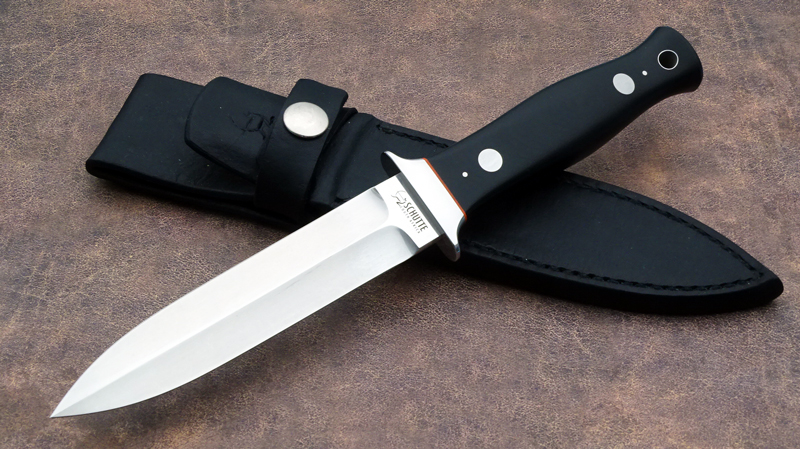
Join us in welcoming these two talented custom knife makers to Robertson’s Custom Cutlery!

Sign up for our Newsletter.


Robertson’s Custom Cutlery is your source for custom knives from today’s leading custom knife makers. We only feature the highest quality knives at value prices. Our custom fixed and folding knife selection includes tactical fixed and folding knives, presentation fixed and folding knives, bowies, hunters and skinners, and a large selection of forged blades. Les Robertson, author and owner of Robertson’s Custom Cutlery, is also a Field Editor for Blade Magazine and an instructor at Blade University. If you have questions about the content in this article or about any knife or maker on our website, you can contact Les directly at les@robertsonscustomcutlery.com or (706) 650-0252.

01
SEP
2019

USER DRIVEN DESIGN – Custom Hunters

Posted By :
Comments : 0

My article, User Driven Design on hunting knives is in the October 2019 issue of Blade Magazine pages 50-53.

There is an overview of different types of knives used by hunters. Specifically, the designs and how they are used. I even discuss the dimensions, steels, guard, and handle material of the styles and  purpose of these blades. Basic maintenance for these knives is also addressed.

Incorporating this knowledge, will allow you to select the right tool for the job. Remember, it isn’t the firearm that creates the trophy, it is the knife.,

Blade Magazine Oct. 2019 Hunters Knives Custom user driven designBlade Magazine Article User Driven Design Oct. 2019

The following knives are featured in the User Driven Design article and are currently available with Robertson’s Custom Cutlery.

Click on the linked photos below for more detailed info:

Gordon Graham Damascus Hunter Forged Custom Knife

Graham Damascus BW Forged Hunter

Milan Mozolic Hunter Custom Knife

Mozolic Custom Forged Stag Hunter

Wess Barnhill Forged DI Hunter Custom Knife

Barnhill Forged Custom DI Hunter

Want to know more about these and other custom knives?

Sign up for our Newsletter.


Robertson’s Custom Cutlery is your source for custom knives from today’s leading custom knife makers. We only feature the highest quality knives at value prices. Our custom fixed and folding knife selection includes tactical fixed and folding knives, presentation fixed and folding knives, bowies, hunters and skinners, and a large selection of forged blades. Les Robertson, author and owner of Robertson’s Custom Cutlery, is also a Field Editor for Blade Magazine and an instructor at Blade University. If you have questions about the content in this article or about any knife or maker on our website, you can contact Les directly at customknives@comcast.net or (706) 650-0252.

05
JUN
2019

Blade Show Opportunities

Posted By :
Comments : 0

BLADE SHOW INCOMING KNIVES
If you are looking for something specific and can’t make it to the show, let us know. Maybe we can help.
These are just a couple of examples of knives we are planning to pick up at the Blade Show in Atlanta.  Place your order now and we’ll ship it after the show!

GREG KEITH FORGED DAMASCUS BOWIE WITH DESERT IRONWOOD
Blade Length: 9″ OL: 14″
Blade Steel: Ladder Pattern Forged Damascus with fuller
Blade Finish: Acid Etched
Guard: Stainless Steel
Handle: Presentation Desert Ironwood
Sheath: Custom made leather sheath by maker
Comments:  Great balance!  The fuller really adds to the overall look of the knife design.  Excellent handle ergonomics.  Greg is an ABS Journeyman Smith.
TONI OOSTENDORP ORBIS 5 TACTICAL FIXED BLADE
Blade Length: 5″
Overall Length: 9.5″
Blade Steel: O-1
Blade Finish: Black Cera Kote
Guard Material: Stainless Steel
Handle Material: Contoured and grooved black Micarta
Sheath: Kydex with Maxpedition knife pouch.
Comments: All Orbis knives are integral. The blade, guard and tang are all forged from one piece of O-1 steel. The pommel is glued and penned into position giving you the utmost confidence in the performance of this knife.
Toni is an ABS Journeyman Smith.  Click here to learn more about custom knife maker, Toni Oostendorp.
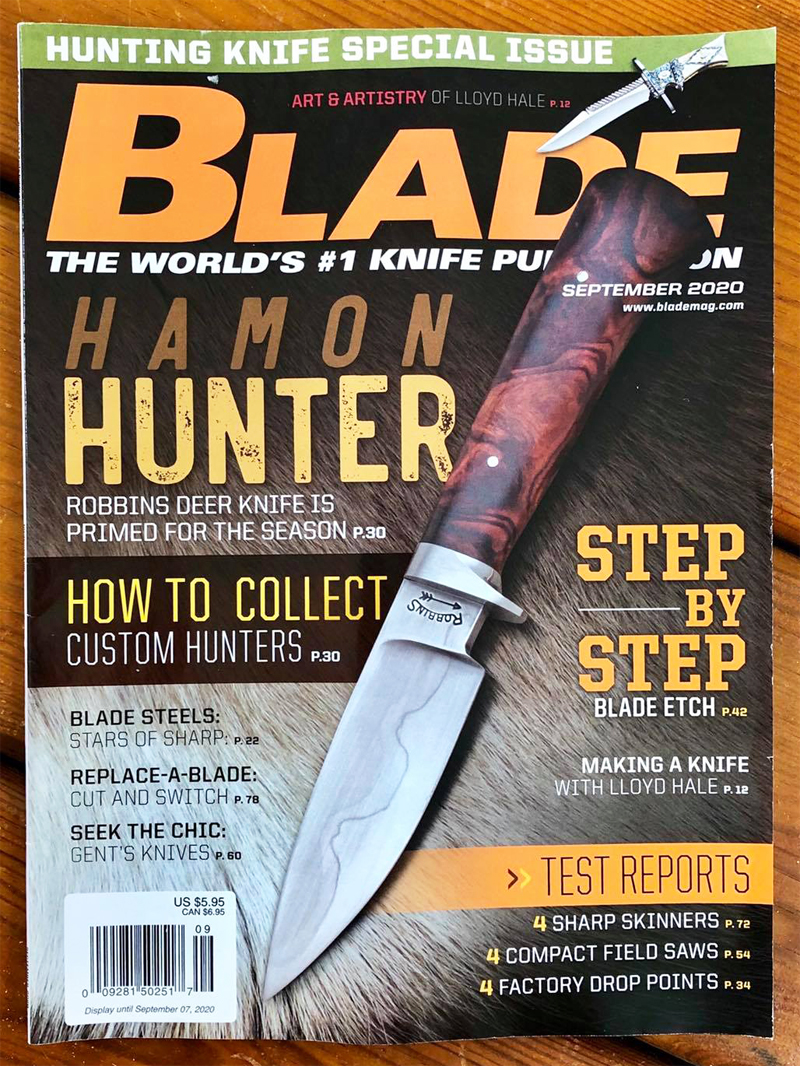
JOSH FISHER CUSTOM FORGED DAMASCUS SAN MAI FIGHTING KNIFE
Blade Length: 9″ OL: 14″
Blade Steel: Forged San Mai, 416 stainless, Damascus core
Guard, ferrule, pommel material: Hot blued carbon steel guard, ferrule and pommel with stainless steel spacers.
Handle Material: Beautiful Stag
Comments: This knife is very similar to the one featured on the cover of Knives 2019.  It is also in the article Les wrote for Knives 2019. This fixed blade knife is the same knife design as the one which won the “Best Fighter Award” at the 2018 Blade Show. Josh is an ABS Journeyman Smith!  Click here to learn more about the custom knife maker, Josh Fisher.  

If you are attending the show, check out Les’ BLADE UNIVERSITY class. Click for details.

29
MAY
2019

“Collecting the Art of Steel” Blade Magazine

Posted By :
Comments : 0

Blade Magazine Collecting Art of Steel

Don’t miss Les’ latest article, “Collecting: The Art of the Steel,” published on pages 82-87 in the current June issue of Blade Magazine.

Today’s hottest forged knives are boasting flashy San-Mai and Damascus blades. More so than any time over the last 30 years, Damascus and San Mai blades are no longer the purview of just Master Smiths.  Due to improved equipment and the availability of information, Les finds several Apprentice Smiths and Journeyman Smiths creating some exceptional blades.

Some have the skills required to make the blades, but still need improvement on the overall knife.  Other makers, such as the ones featured in the article, have abilities that belie their status in the American Bladesmith Society.  They are few and far between; none the less, they do exist.  The problem is and has been, the price of their knives is not commensurate with their status in the market. That said, each collector will make up their mind with regards to the pricing.

His recommendation to collectors is to do your homework to understand the details of the knife you are looking at and judge them on their own merit.  This is important as there has been a growing trend, particularly among Journeyman Smiths, of pricing their knives more than they are worth in the marketplace.

This publication will be free with your admission into the Blade Show.  See ya in Atlanta at the show!!


24
APR
2019

BLADE UNIVERSITY 2019

Posted By :
Comments : 0

Blade Show Blade University Atlanta 2019

BLADE UNIVERSITY

Saturday, June 8th, Les will be teaching a class as part of Blade University at the Blade Show in Atlanta, GA.  This will be conducted in room 109, starting at 9:45 am – 10:45 am.  The subject, “Is a Custom Knife Dealer/Purveyor For You? ” will benefit both knife makers and collectors.

For the purposes of this class, Les (whose focus has been only custom knives for 32 years) will be discussing specifically those dealers/purveyors who buy and sell ONLY custom knives.  Unlike some dealers who sell both factory and custom knives, those with instiutional or specific knowledge of custom knives will benefit both the knife maker or custom knife collector much more.

The following will be discussed in the seminar:
*Maker benefits for working with a custom knife dealer/purveyor
*Collector benefits for working with a custom knife dealer/purveyor
*Potential problems for makers working with custom dealers/purveyors
*Potential problems for collectors working with custom knife dealers/purveyors
This link https://bladeshow.com/education/blade-u/ will take you directly to the Blade University portion of the Blade Show website where you may purchase tickets ahead of time.  Last year both of the classes he taught sold out.  Hope to see you there…

Is a Custom Knife Dealer/Purveyor for You?

Saturday, June 8th 9:45 am – 10:45 am  Room 109

BLADE SHOW 2019   ATLANTA, GA
June 7 – 9
Fri. 2 pm – 7 pm    Cobb Galleria Centre
Sat. 9 am – 6 pm   2450 Galleria Parkway

Robertson’s Custom Cutlery is your source for custom knives from today’s leading custom knife makers. We only feature the highest quality knives at value prices. Our custom fixed and folding knife selection includes tactical fixed and folding knives, presentation fixed and folding knives, bowies, hunters and skinners, and a large selection of forged blades. Les Robertson, author and owner of Robertson’s Custom Cutlery, is also a Field Editor for Blade Magazine and an instructor at Blade University. If you have questions about the content in this article or about any knife or maker on our website, you can contact Les directly at customknives@comcast.net or (706) 650-0252.

18
FEB
2019

ARKANSAS KNIFE SHOW REVIEW

Posted By :
Comments : 0

The Arkansas Knife Show

Saturday, February 16
Little Rock, AR

Congratulations to Logan Pearce for once again putting on a excellent custom knife show.

The custom knife makers ranged from newer ABS Apprentice Smith makers to World Class ABS Master Smiths.

Master Smith makers attending were Harvey Dean, Jerry Fisk, Jim Crowell, Steve Culver, Kyle Royer, John Horrigan, J.R. Cook, Lin Rhea, Bill Buxton and others.

Journeymen Smiths were well represented with Josh Fisher showing off his first Sub-Hilt Fighter.  Shawn Ellis won the Best Hunter Award and  Scott Gallagher won the Best Folder Award.  Other talented JS makers in attendance were Allen Newberry, Karl Andersen and Larry Cox.

Allen Newberry brought some nice silver wire inlay handled knives. Karl Andersen offered a good selection of take down knives. Larry Cox had some very nice Damascus and Ivory fixed blades.

I had very informative conversations with Apprentice Smiths, Mitch Cargile and Mark Fleming.  Both are doing clean work and attaining their JS Stamps will happen in the very near future.

The Arkansas show is second only to the Blade Show in both variety and quality of forged blades.  This show not only offers knives from a wide variety of makers, it does so in a relaxed environment.

The show will be moving from February to March for 2020.  I highly recommend fitting this into your knife show plans.  You will not be disappointed.

03
FEB
2019

Handmade Knives’ Cyclical Nature

Posted By :
Comments : 0

KNIVES 2019

Be sure to pick up a copy of Knives 2019. In addition to all the incredible photos, you can read my article, “The Cyclical Nature of Handmade Knives.”

Starting on page 8, I discuss my take on the custom knife market from 1984 to now. Oh, the photo is ABS Master Smith Steve Randall’s First Sub-Hilt Fighter!

05
JAN
2019

4 Paths to Collector Glory Blade Mag. 1/2019

Posted By :
Comments : 0

Please check out Les’ article on “4 Paths to the Collector Glory” in the Jan. issue of Blade Magazine pages 22-25.

15
OCT
2018

Custom Knives; Is Your Education Lacking? Part 1

Posted By :
Comments : 0


Information on knife makers, styles, materials, and all things custom knives can be found in publications that are primarily knife related and those that have articles or include them in their stories.  Combine that with the amount of information on the internet and the membership levels of internet forums, one can argue you never have to leave your house to find out all you need to know about a custom knife. You could argue that, but I would submit to you that you are wrong.

BUGGY WHIPS AND BICYCLES

For centuries, buggy whips saw steady sales.  Businesses were built and careers were made crafting this necessary piece of equipment for everyone from the average person to the gentry. Then at the turn of the 20th century many of these stores closed up shop.  Why?   The introduction of the automobile changed the focus of what consumers wanted.   Many gave the public what they wanted and adapted with the times.  Some went into the bicycle business and even that morphed into something else.  A couple of friends changed the idea of the bicycle and their newest ideas can be seen today all over the roads and in their Headquarters in Milwaukee, WI.   A couple of brothers moved from Ohio to North Carolina and today you see their ideas; but you have to look up.

Today, custom knife making and collecting move at a rapid pace.  Techniques, materials, openers, locks from the past are morphed into updated versions of your Grandfather’s, maybe even your Father’s pocket knife. New makers seem to show up weekly if not daily. I routinely receive emails and phone calls inquiring about a new maker.  When I reply that I have not heard of them, I am often met with, “They have been making knives for 3 months and they are awesome.”  No doubt there are some knife makers that show great potential almost immediately with varied backgrounds, many with newly acquired machining skills from their job or a technical school.  While for most the learning curve is a little longer than 3-6 months.  In particular, for tactical folders, with the right machines and the training that curve can be cut in half.  That said, my curiosity is always piqued by the latest knife making savant.

Parts 2 

Part 3


Robertson’s Custom Cutlery is your source for custom knives from today’s leading custom knife makers. We only feature the highest quality knives at value prices. Our custom fixed and folding knife selection includes tactical fixed and folding knives, presentation fixed and folding knives, bowies, hunters and skinners, and a large selection of forged blades. Les Robertson, author and owner of Robertson’s Custom Cutlery, is also a Field Editor for Blade Magazine and an instructor at Blade University. If you have questions about the content in this article or about any knife or maker on our website, you can contact Les directly at les@robertsonscustomcutlery.com or (706) 650-0252.