• Custom knife expert for 40 years
  • Exclusive designs & limited editions
  • Personal customer service
  • Offering custom knives from some of
    the best custom knife makers in the world
01
NOV
2025

The “V Factor”

The Collector’s Guide to the “V Factor”

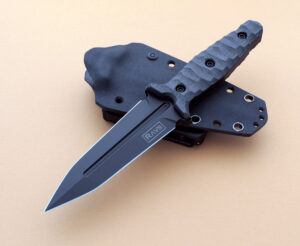
Patton Vanguard Intrepid Tactical Sub-Hilt Fighter

Patton Vanguard Intrepid Tactical Sub-Hilt Fighter

Why Tactical Fixed Blades are Back in Focus?

The custom knife market is constantly evolving. Just as with any collectible sector, demand shifts from year to year. In 2024, collectors began adjusting their buying strategies, focusing less on ultra-high-end, multi-thousand-dollar knives and more on high-quality, functional blades that offer lasting value at reasonable price points.

One category experiencing renewed energy in 2025 is the tactical fixed blade custom knife. Collectors, enthusiasts, and even first-time buyers are rediscovering the diversity, practicality, and affordability of this market sector.

The Cycles of the Custom Knife Market

Knife collecting is like any collectible field—trends heat up, cool down, and eventually return. When demand for a certain style rises, prices increase, and more makers enter that category. Eventually, the market stabilizes, leaving a few standout makers whose work retains value and demand.

Tactical knives, particularly custom tactical fixed blades, are a prime example of this cycle. After cooling for a time, they are now heating up again, offering collectors an exciting mix of function, innovation, and artistry.

Dziubinski Trail Head Tactical EDC

Dziubinski Trail Head Tactical EDC

Why Tactical Fixed Blades Appeal to Collectors?

Three key factors explain why tactical fixed blades are regaining momentum:

  1. Diversity of Styles

The term tactical knife first entered the market in the mid-1990s. Initially, it described aesthetics more than function. When Blade Show introduced tactical knife awards, the only requirement was simple: a non-reflective finish and a synthetic handle material.

This lack of rigid parameters created incredible diversity. Collectors could find tactical knives ranging from compact EDC utility blades to imposing sub-hilt fighters. Finishes included bead-blast, tumble, machine satin, and blackened coatings—each appealing to different tastes and uses.

  1. Innovation in Materials

Tactical knives also played a key role in introducing new steels and materials into the custom knife world. High-performance steels such as Stellite, Talonite, and powdered steels first gained traction through tactical knife makers.

Handle materials evolved rapidly, too. Early G-10 and Micarta gave way to carbon fiber, lightning strike carbon fiber, copper carbon fiber, Carbo Quartz, Fat Carbon, and even antique Micarta. This explosion of materials gave collectors endless ways to balance performance, durability, and aesthetics.

  1. Price Point and Accessibility

Perhaps the most compelling factor in today’s market is price. Collectors can find excellent tactical fixed blades in the $300–$800 range—a sweet spot that balances affordability with craftsmanship. This makes them attractive not only to seasoned collectors but also to new buyers entering the custom knife world.

Wrocinski Reaper Tactical Sub-Hilt Fighter

Wrocinski Reaper Sub-Hilt Fighter

The “V Factor”: What Makes a Tactical Knife Stand Out?

When it comes to tactical knives, the initial attraction is Visual. The design draws your attention. But once the knife is in your hand, it triggers a Visceral reaction.

A well-crafted tactical knife feels like an extension of your body. Its balance, symmetry, and ergonomic handle design make it effortless to use. This combination of visual appeal and visceral connection—the V Factor—is what keeps collectors returning to tactical knives.

Dziubinski Nomad Tactical Camp Knife

Dziubinski Nomad Tactical Camp Knife

Matching the Knife to the Job

Thanks to their variety, tactical fixed blades can meet nearly any need:

  • Everyday Utility & Field Work – Compact designs like the Ridgeline by Rafal Kolakowski or the Trail Head EDC by Tomasz Dziubinski balance lightweight carry, excellent ergonomics, and durability.
  • Heavy-Duty Choppers – Large blades such as Piotr Gosciniak’s Tracker or Tomasz Dziubinski’s Nomad handle demanding tasks like clearing brush, batoning wood, or processing game.
  • Sub-Hilt Fighters – Sleek, aggressive, and highly collectible, these remain among the most desirable tactical designs. Adam Wrocinski Reaper and Phillip Patton’s Vanguard Intrepid showcase exceptional craftsmanship in this style.
  • Military-Inspired Daggers – For those drawn to combat influence, Rafal Kolakowski’s Spektra dagger embodies sleek, functional military design.

Smart Buying Tips for Collectors

When evaluating tactical knives, keep the following in mind:

  • Research the maker – Not all tactical knives are equal. Focus on makers with proven reputations.
  • Function over flash – Extra holes, saw teeth, and unnecessary serrations may look “tactic-cool” but often add expense without performance.
  • Prioritize ergonomics – A knife meant for hard use should balance well and feel secure in the hand. Guards or well-shaped handles help protect against injury.
  • Less is often more – Clean, purposeful designs typically perform best and hold long-term collector value.
Kolakowski Spektra Tactical Dagger Published in Blade Magazine & the KNIVES 2026 Annual Stealth Black

Kolakowski Spektra Dagger

Final Thoughts

In today’s custom knife market, tactical fixed blades offer one of the most exciting areas for collectors and users alike. They combine diversity, cutting-edge materials, and accessible price points—all while delivering the kind of craftsmanship that makes custom knives special.

For collectors looking to expand their portfolios, or for newcomers wanting a high-performance introduction into the world of custom knives, tactical fixed blades are a sector worth watching in 2025 and beyond.
27
SEP
2025

Daggers: History, Design and Modern Collectability

The Timeless Appeal of Daggers

From ancient battlefields to modern collector showcases, the dagger has remained one of the most iconic and functional edged weapons in history. Designed for precision thrusting and close-quarters defense, daggers have evolved across centuries while maintaining their defining traits—symmetrical double-edged blades, a focus on piercing capability, and compact, easily carried designs. Whether forged from bone, brass, or high-performance modern steels, daggers have always served as both tools of survival and symbols of status. View our RCC YouTube Video on the Spektra Daggers.

Kolakowski Spektra Tactical Custom Dagger Black Published in Blade Magazine cover and in Knives 2026 Annual

Kolakowski Spektra Tactical Dagger

Origins and Early Use of Daggers  

The exact origin of the word dagger remains a mystery, though it is believed to stem from the old French word, “daque” or the old Italian, “daga.” By the 14th century, the term was widely used to distinguish these short thrusting weapons from swords.

In medieval Europe, daggers were not just battlefield tools—they were also markers of wealth and prestige. Aristocrats carried ornate daggers with decorative sheaths, while commoners often crafted functional versions from bone or antler when metal was unavailable.

Daggers in American Self-Defense

In 19th-century America, the Bowie knife dominated as a multi-purpose tool and weapon during frontier settlement. But as cities grew and large knives became socially unacceptable in public, smaller, concealable weapons like daggers and pocket pistols replaced them. Daggers offered effective close-quarters defense, though their short range eventually gave way to the revolver as the preferred personal defense weapon.

Close-Quarters Combat (CQC) and Military Daggers

World War II: The Fairbairn-Sykes Fighting Knife No WWII dagger carries more legend than the Fairbairn-Sykes (FS) fighting knife, designed by British officers William Fairbairn and Eric Sykes. Slim, double-edged, and needle-pointed, it was ideal for stealthy thrusts in commando operations. Produced in three distinct patterns between 1940 and 1943, the FS dagger remains a benchmark in military knife design. Watch our RCC YouTube Video on Tactical Daggers.

Notable modern reproductions include:

-Brent Sandow: Pattern Two FS with D-2 steel blade, stainless guard, scalloped handle, and tactical Gunkote finish.

– Piotr Gosciniak: Stealth Dagger, fuller-bladed FS with black Cerakote, laser-cut G-10 grip, and scalloped guard for improved indexing and control. RCC YouTube Video on Gosciniak’s latest models. Stealth to Skinner

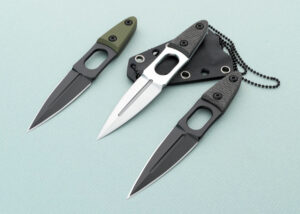
– Kolakowski Vanguard Stingers are inspired by an OSS (Office of Strategic Services) knife designed primarily for self-defense. The hole in the handle perfectly fits your thumb, giving you excellent control over the blade. The Micarta is serrated to aid in further control of the knife if it gets wet. The underside of the blade features a concave grind. Reducing weight and helping in extraction, the fuller increases the blade’s strength. Buy this Vanguard design exclusively from Robertson’s Custom Cutlery. See the Vanguard Stinger in action on YouTube.

Collector’s Lesson: Why Tang Construction Matters

In 1983, during U.S. Army Infantry Officers Basic Course training, I learned firsthand the importance of full-tang construction. I stuck a factory-made dagger—revered for its Vietnam War reputation— in a tree to tie off some 550 cord.  When I pulled the knife out of the tree, the handle was in my hand and the blade was still stuck in the tree.  This happened because its tang was only one inch long and glued in place.  Inferior construction led to a catastrophic failure.

From that day forward, I vowed to only use full-tang knives and began exclusively buying custom blades. Serious collectors and users should always verify tang construction before purchase.  Comprise elsewhere—because when your life depends on your knife, failure is not an option.

Daggers as Functional Art and Historic Icons

Daggers remain as relevant today for collectors and enthusiasts as they were for warriors centuries ago. From historical battlefield designs to innovative modern interpretations, they embody both artistry and lethal efficiency. Whether you are drawn to them for their history, craftsmanship, or combat utility; understanding the design, materials, and knifemaker behind each blade will enhance both your appreciation and your collection.  Watch our RCC YouTube Video on Tactical Daggers.

27
JUL
2025

Vanguard Tactical Neck Knives

KOLAKOWSKI VANGUARD CUSTOM TACTICAL NECK KNIVES

Kolakowski Vanguard Tactical Neck Knives Street Scalpel Black Stinger set CerakoteRafal Kolakowski Vanguard Custom Stinger Tactical Neck Knife OD Green handle Dagger blade Black Cerakote finish Self Defense Kydex sheath included

Rafal Kolakowski Vanguard Custom Stinger Tactical Neck Knife OD Green handle Dagger blade Black Cerakote finish Self Defense Kydex sheath includedRafal Kolakowski Vanguard Custom Tactical Street Scapel Neck Knife OD Green Black Cerakote blade Self Defense Sheath

Rafal Kolakowski Vanguard Custom Neck Knife Exclusive design Tactical Stinger SS Dagger blade

Rafal Kolakowski Vanguard Custom Tactical Stinger Neck Knife Exclusive Design Black Cerakote Dagger Fuller Kydex Sheath Self DefenseKolakowski Vanguard Tactical Street Scalpel Black Neck Knife Exclusive Custom made

Rafal Kolakowski Vanguard Custom Tactical Street Scapel Neck Knife OD Green Black Cerakote blade Self Defense Sheath

Robertsons Custom Cutlery Vanguard line of knives Limited Edition Designs Exclusively made for RCC

Robertson’s Custom Cutlery Vanguard line of knives – Limited Edition Designs – Exclusively made for RCC.